Unlock This Playbook
Create a free account to access execution playbooks
Already have an account? Sign in
Data Liquidity — Your Unfair Advantage
Organize your data so agents can access it instantly. The lean founder with organized data beats the well-funded competitor every time.
The Data Liquidity Problem
Your agents are only as good as the data they can reach. Right now, your startup's data is probably scattered across seven or more systems, each with its own format, its own access method, and its own version of the truth. This is the single biggest bottleneck to effective agent deployment -- and most founders do not even realize it.
Consider a typical lean startup's data landscape. Customer information lives in fragments, spread across disconnected systems that were never designed to talk to each other:
Salesforce
Deals, contacts, pipeline stages, notes
Gmail
Conversations, attachments, scheduling
Stripe
Payments, subscriptions, invoices
Zendesk
Support tickets, satisfaction scores
Slack
Internal comms, customer channels
Mixpanel
Product usage, events, funnels
Intercom
Chat history, user attributes, campaigns
When a human needs a complete picture of a customer -- their payment history, support interactions, product usage, and communication history -- they open seven tabs, run seven queries, and spend two to three hours stitching together a coherent narrative. That is two to three hours of founder time, every single time.
The Speed Gap
2-3 Hours
Traditional Human Query
Open 7 systems, export data, cross-reference IDs, build spreadsheet, verify accuracy, write summary
3 Seconds
Agent Query (With Data Liquidity)
Single query to central database, instant join across all data sources, formatted report generated automatically
That is a 3,600x speed improvement. Not 3.6x. Not 36x. Three thousand six hundred times faster. This is what data liquidity unlocks.
The Data Liquidity Solution
Data liquidity means your data flows freely to wherever it is needed, in the format it is needed, at the moment it is needed. It is the difference between a frozen lake and a flowing river. Your agents need a river.
The solution has three components, and all three are achievable on a lean budget:
1. Centralization
One database as the single source of truth. All customer data flows here, regardless of which system generated it.
Cost: $15/month for a managed PostgreSQL instance (e.g., Supabase, Railway, or Render)
2. Standardization
Clear schema design with consistent naming, typed fields, and explicit relationships. Agents need structure to query effectively.
Cost: Your time -- approximately 8 hours of upfront schema design
3. Automation
Hourly syncs from each source system to your central database. Set once, runs forever. No manual data entry, no stale information.
Cost: 4-6 hours to set up sync scripts, then $0/month to run (cron jobs)
The Central Customer Database Schema
Here is the schema that powers data liquidity. This is not theoretical -- it is the same structure used by startups generating 50-100x ROI from their agent deployments:
-- Central Customer Database Schema
-- Cost: $15/month PostgreSQL instance

CREATE TABLE customers (
    id              UUID PRIMARY KEY DEFAULT gen_random_uuid(),
    email           VARCHAR(255) UNIQUE NOT NULL,
    name            VARCHAR(255),
    company         VARCHAR(255),
    created_at      TIMESTAMP DEFAULT NOW(),
    updated_at      TIMESTAMP DEFAULT NOW(),

    -- Source system IDs (for sync reconciliation)
    stripe_id       VARCHAR(100),
    salesforce_id   VARCHAR(100),
    intercom_id     VARCHAR(100),
    zendesk_id      VARCHAR(100),

    -- Computed fields (updated by sync jobs)
    lifetime_value  DECIMAL(10,2) DEFAULT 0,
    health_score    INTEGER DEFAULT 50,  -- 0-100
    last_activity   TIMESTAMP,
    tier            VARCHAR(50),         -- free, starter, pro, enterprise
    churn_risk      VARCHAR(20)          -- low, medium, high
);

CREATE TABLE customer_events (
    id              UUID PRIMARY KEY DEFAULT gen_random_uuid(),
    customer_id     UUID REFERENCES customers(id),
    event_type      VARCHAR(100) NOT NULL,  -- payment, support_ticket, login, etc.
    source_system   VARCHAR(50) NOT NULL,   -- stripe, zendesk, mixpanel, etc.
    event_data      JSONB,
    occurred_at     TIMESTAMP NOT NULL,
    synced_at       TIMESTAMP DEFAULT NOW()
);

CREATE TABLE customer_communications (
    id              UUID PRIMARY KEY DEFAULT gen_random_uuid(),
    customer_id     UUID REFERENCES customers(id),
    channel         VARCHAR(50) NOT NULL,   -- email, chat, slack, phone
    direction       VARCHAR(10) NOT NULL,   -- inbound, outbound
    subject         TEXT,
    summary         TEXT,                   -- AI-generated summary
    sentiment       VARCHAR(20),            -- positive, neutral, negative
    occurred_at     TIMESTAMP NOT NULL
);

-- Indexes for agent queries (fast lookups)
CREATE INDEX idx_events_customer ON customer_events(customer_id, occurred_at DESC);
CREATE INDEX idx_events_type ON customer_events(event_type, occurred_at DESC);
CREATE INDEX idx_comms_customer ON customer_communications(customer_id, occurred_at DESC);
CREATE INDEX idx_customers_health ON customers(health_score, churn_risk);
With this schema in place, an agent can answer "Show me all high-churn-risk customers who submitted support tickets this week and have a lifetime value above $5,000" in under one second. Without it, a human spends three hours across four different systems to get the same answer.
The Lean Data Liquidity Roadmap
Data liquidity is a 4-week project requiring approximately 20 hours of total effort and $15/month in ongoing costs. Here is the week-by-week plan:
| Week | Focus | Hours | Deliverable |
|---|---|---|---|
| Week 1 | Audit and Schema Design | 6 hours | Complete data map of all 7 systems + finalized database schema |
| Week 2 | Database Setup and Initial Import | 5 hours | PostgreSQL instance running + historical data imported from top 3 sources |
| Week 3 | Sync Automation | 5 hours | Hourly sync scripts running for all data sources via cron jobs |
| Week 4 | Agent Integration and Testing | 4 hours | First agent querying central database + validation of data accuracy |
| Total | 20 hours | Ongoing cost: $15/month |
ROI: The Data Liquidity Multiplier
Data liquidity projects consistently deliver 50-80x ROI. Here is the math:
Investment
- 20 hours of setup time at $75/hr (contractor rate; see Playbook 1, Chapter 3 for $150/hr founder opportunity cost rate) = $1,500
- $15/month hosting = $180/year
- Year 1 total cost: $1,680
Returns
- 10 hours/week saved on data queries = $39,000/year
- Agent-powered churn prevention = $24,000/year
- Faster customer response time = $18,000/year
- Year 1 total value: $81,000
The Data Liquidity Truth
"A lean founder with organized data and simple agents beats a well-funded startup with sophisticated agents and messy data -- every single time."
This is the most counterintuitive insight in autonomous agent development. Founders chase increasingly powerful AI models and complex agent architectures when the real bottleneck is data accessibility. A basic agent with clean, centralized data will outperform a state-of-the-art agent stumbling through seven disconnected APIs. Fix the data first. Always.
Common Mistakes to Avoid
Over-Engineering the Schema
Start with three tables (customers, events, communications). You can add more later. Founders who try to model every possible data relationship upfront spend weeks in design and never ship. The schema above handles 90% of agent queries. Ship it, then iterate.
Boiling the Ocean
Do not try to sync all seven systems in Week 1. Start with your three highest-value data sources (typically CRM, payments, and support). Add the rest incrementally. Partial data liquidity still delivers massive value.
Ignoring Data Quality
Garbage in, garbage out applies doubly to agents. Build validation into your sync scripts: check for duplicate emails, standardize phone formats, flag missing fields. 30 minutes of validation logic saves hundreds of hours of agent errors.
Skipping the Health Score
The health_score computed field is the most valuable column in your database. It is what allows agents to prioritize actions autonomously -- triaging high-risk customers before low-risk ones without human intervention.
Capstone Exercise: Your Data Liquidity Plan
Your Assignment
- Map your data sources: List every system where customer data lives. For each, note the data types, access method (API, export, scraping), and approximate record count.
- Identify your top 3 sources: Rank by value to agent operations. Which three systems, if unified, would enable the most impactful automations?
- Design your schema: Adapt the template above to your specific data model. Add fields unique to your business. Remove fields you do not need.
- Estimate your ROI: Calculate hours currently spent on cross-system data queries. Multiply by your hourly rate. That is your baseline annual savings.
- Set your Week 1 goal: Choose your database provider, finalize your schema, and schedule your first 6-hour work block.
Target outcome: A complete data liquidity plan with schema design, source prioritization, sync schedule, and ROI projection -- ready to execute in the next 4 weeks.
LeanPivot AI Tools
AI-powered tools to help you execute this stage faster.
Go-to-Market Strategy
Plan your GTM strategy with agent-powered advantages.
Competitive Deep-Dive
Analyze competitors and identify moat opportunities.
Early Traction Metrics
Define the metrics that prove your agent moat is working.
Channel Testing Generator
Design experiments to scale your agent-powered channels.
Recommended External Tools
Third-party tools that complement this stage of your journey.
Recommended Reading
Essential books for the Launch stage.

Traction: How Any Startup Can Achieve Explosive Growth
Gabriel Weinberg's playbook for getting customers. 19 traction channels explained.

Running Lean: Iterate from Plan A to a Plan That Works
Ash Maurya's practical guide to Lean Canvas and continuous innovation.
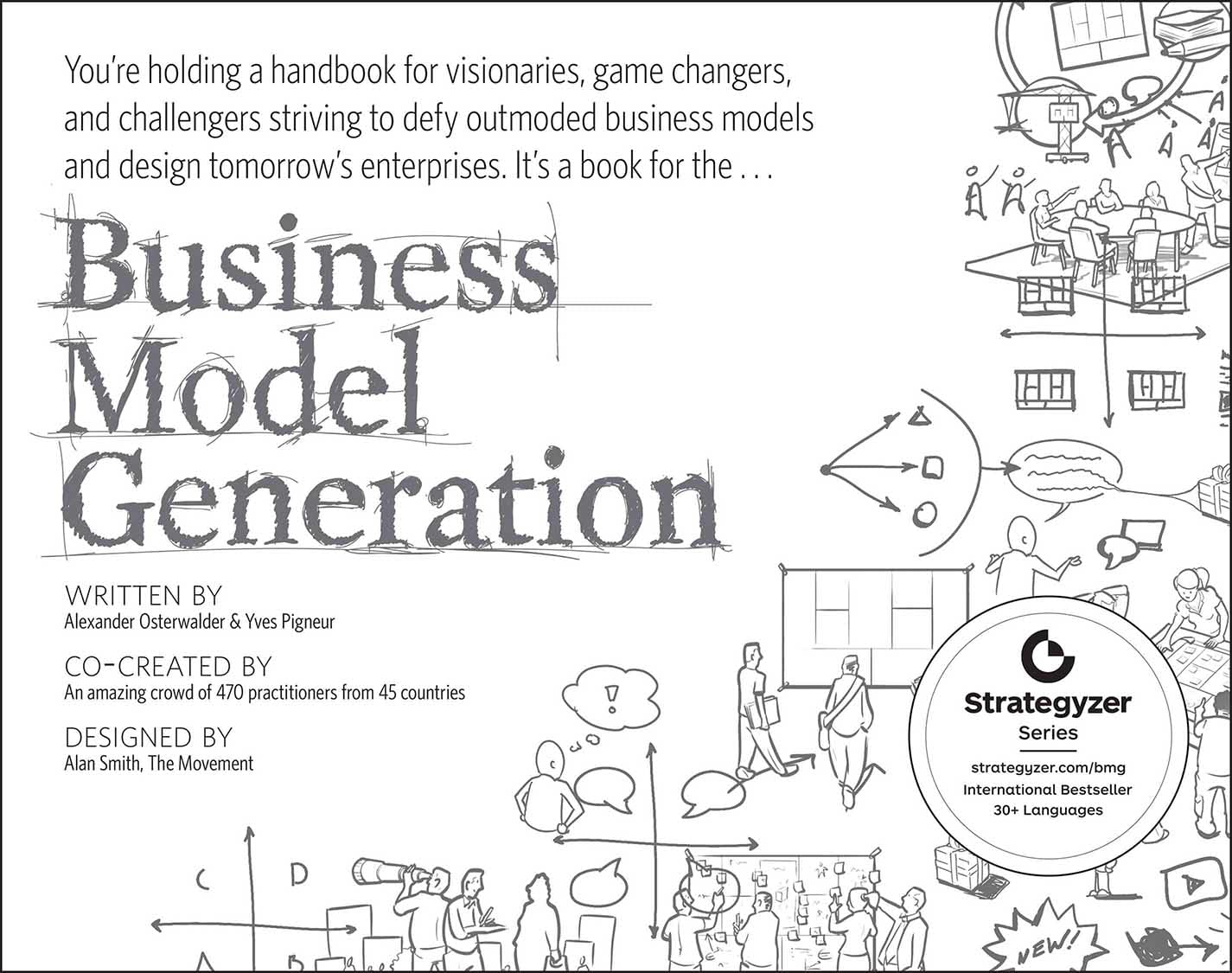
Business Model Generation: A Handbook for Visionaries, Game Changers, and Challengers
Business Model Generation is a handbook for visionaries, game changers, and challengers striving to defy outmoded business models and design tomorrow's enterprises. By Alex Osterwalder & Yves Pigneur.

The Mom Test: How to Talk to Customers & Learn if Your Business is a Good Idea
How to Talk to Customers & Learn if Your Business is a Good Idea by Rob Fitzpatrick.
Tools & Resources
Software and services to accelerate your Launch stage.
 tools
tools
Emergent.sh
Chat interface design tool for frontend and backend development. Coupon code: ROVNRMMG for 5% off on all payments
 tools
tools
Lovable.dev
AI-powered platform that builds full-stack web applications and websites from simple, natural language prompts.
 courses
Ikigai: The Japanese Secret to a Long and Happy Life Hardcover
Ikigai: The Japanese Secret to a Long and Happy Life explores the Japanese concept of ikigai—the overlap of what you love, what you're good at, what you can be paid for, and what the world needs—as the key to a happier and longer life.
 tools
tools
Qoder
Qoder is a next-generation AI-powered coding platform developed by Alibaba, designed to go beyond simple code completion and act as an agentic coding environment for real-world software development. Here’s what makes it unique:
 courses
The Power of Regret: How Looking Backward Moves Us Forward
The Power of Regret: How Looking Backward Moves Us Forward
 software
ActiveCampaign: Autonomous Marketing Automation & CRM for Strategic Growth
Power every marketing experience, including email campaigns, SMS automation, and WhatsApp messaging, with Active Intelligence that imagines, activates, and validates for you.
Some links are affiliate links. We may earn a small commission at no extra cost to you.
Save Your Progress
Create a free account to save your reading progress, bookmark chapters, and unlock Playbooks 04-08 (MVP, Launch, Growth & Funding).
Ready to Build Autonomous Agents?
LeanPivot.ai provides 85+ AI-powered tools to help you design and deploy autonomous agents the lean way.
Start Free TodayWorks Cited & Recommended Reading
AI Agents & Agentic Architecture
- Ries, E. (2011). The Lean Startup: How Today's Entrepreneurs Use Continuous Innovation. Crown Business
- Maurya, A. (2012). Running Lean: Iterate from Plan A to a Plan That Works. O'Reilly Media
- Coeckelbergh, M. (2020). AI Ethics. MIT Press
- EU AI Act - Regulatory Framework for Artificial Intelligence
Lean Startup & Responsible AI
- LeanPivot.ai Features - Lean Startup Tools from Ideation to Investment
- Anthropic - Responsible AI Development
- OpenAI - AI Safety and Alignment
- NIST AI Risk Management Framework
This playbook synthesizes research from agentic AI frameworks, lean startup methodology, and responsible AI governance. Data reflects the 2025-2026 AI agent landscape. Some links may be affiliate links.