Tools & Resources
AI-powered tools and recommended resources for Launch Execution.
Unlock This Playbook
Create a free account to access execution playbooks
Already have an account? Sign in
Recommended Workflow
Use these tools in sequence to execute a successful launch. Each tool builds on the output of the previous one, creating a coherent launch plan that covers strategy, execution, and post-launch optimization.
- Launch Readiness Audit -- Start here. This tool evaluates your product, team, and infrastructure against a comprehensive readiness framework. It surfaces gaps you need to close before setting a launch date. Run it at T-30 days and again at T-7 days to track progress.
- Launch Checklist Generator -- Generate a customized checklist tailored to your product type, team size, and launch scope. The checklist covers product, technical, legal, marketing, sales, and support readiness. Use it as the backbone of your daily standups during the launch countdown.
- Go-To-Market Strategy -- Synthesize your target customer, competitive positioning, and channel strategy into a single GTM document. This ensures your launch messaging is consistent across every touchpoint, from your landing page to your press release to your sales deck.
- Launch Campaign Planner -- Coordinate all launch activities across channels and timelines. The planner produces a day-by-day execution calendar with owners, dependencies, and contingency plans. This is your command center for launch week.
- Website Launch Checklist -- Audit your web presence for performance, SEO, accessibility, conversion optimization, and tracking. A broken checkout flow or a slow-loading landing page on launch day can negate weeks of preparation.
- Press Release Generator -- Craft a professional press release that tells your launch story. The output follows standard wire service format and can be sent directly to journalists, posted on your blog, or used as the foundation for your launch announcement.
- Sales Playbook Generator -- Equip your sales team with battle cards, objection handling guides, demo scripts, and competitive positioning one-pagers. Run this tool at least two weeks before launch so the team has time to internalize the material.
Start with Launch Readiness
Before you build your launch plan, assess where you stand. The Launch Readiness Audit evaluates your product, infrastructure, team, and go-to-market assets against a proven readiness framework and produces a gap analysis with prioritized action items.
Launch Toolkit by Phase
A successful launch is not a single event -- it is a three-phase operation that spans roughly 60 days. Each phase has distinct objectives, different tools, and unique failure modes. Trying to compress this timeline or skip a phase is the single most common reason launches fail. The tools below are organized by the phase in which they deliver the most value.
Phase 1: Pre-Launch Preparation (T-30 to T-7)
The pre-launch phase is where 80% of launch success is determined. During this phase, you are building the infrastructure, assets, and team readiness that will support everything that follows. The goal is to eliminate surprises. Every gap discovered during pre-launch is a gap that will not become a crisis on launch day. Founders who rush through this phase to "just ship it" consistently report more bugs, more support tickets, and lower conversion rates than those who invest the full 30 days.
| Tool | Task | Expected Outcome | When to Run |
|---|---|---|---|
| Launch Readiness Audit | Assess product, technical, and team readiness against a comprehensive framework | Gap analysis with prioritized action items and estimated effort for each | T-30, T-14 |
| Launch Checklist Generator | Create a customized pre-launch checklist covering all departments | Department-by-department checklist with owners and status tracking | T-28 |
| Go-To-Market Strategy | Define target market, positioning, channels, and pricing model | Complete GTM strategy document with milestones and success criteria | T-25 |
| Competitive Deep-Dive | Map competitive landscape and refine differentiation | Positioning matrix, battle cards, and messaging differentiation statements | T-25 |
| Sales Playbook Generator | Build sales enablement materials and objection handling guides | Battle cards, demo scripts, FAQ, and competitive positioning one-pagers | T-21 |
| Website Launch Checklist | Audit web presence for performance, SEO, accessibility, and conversion | Prioritized list of web fixes with severity ratings and implementation guidance | T-14 |
Phase 2: Launch Execution (T-7 to T+0)
The execution phase is about coordination, not creation. Every asset should be built, every team member trained, and every system tested before this phase begins. Launch week is for final rehearsals, Go/No-Go decisions, and precise execution of your launch sequence. If you find yourself still creating assets during launch week, you started too late.
| Tool | Task | Expected Outcome | When to Run |
|---|---|---|---|
| Launch Campaign Planner | Finalize day-by-day execution calendar with channel-specific timing | Hour-by-hour launch day schedule with owners and contingency triggers | T-7 |
| Press Release Generator | Finalize and distribute press release to media contacts | Wire-ready press release with quotes, stats, and boilerplate | T-5 |
| Launch Readiness Audit | Final readiness check -- confirm all gaps from T-30 audit are closed | Green/Yellow/Red status by category for Go/No-Go decision | T-3 |
| Early Adopter Strategy | Activate early adopter outreach sequences and VIP notifications | Personalized outreach templates for your first 50 users | T-2 |
| Channel Testing | Verify all acquisition channels are configured and tracking correctly | Channel readiness report with UTM verification and attribution testing | T-1 |
Phase 3: Post-Launch Stabilization (T+0 to T+30)
The launch is not over when the feature flag flips. The first 30 days after launch are when you validate your assumptions, stabilize your systems under real-world load, and collect the data that will inform your growth strategy. Post-launch is where disciplined teams separate themselves from the pack. The founders who monitor, iterate, and respond during this phase convert launch momentum into sustained traction. The founders who celebrate and move on watch their metrics flatline within two weeks.
| Tool | Task | Expected Outcome | When to Run |
|---|---|---|---|
| Pricing Test | Validate pricing assumptions with real conversion data | Price sensitivity analysis with recommended adjustments | T+7 |
| Channel Testing | Measure channel performance and reallocate spend to winners | Channel performance dashboard with CAC by channel and conversion rates | T+14 |
| Competitive Deep-Dive | Reassess competitive positioning based on market response | Updated positioning document reflecting real customer feedback | T+21 |
| Go-To-Market Strategy | Revise GTM strategy based on actual launch data vs. projections | Updated GTM document with data-backed channel and messaging pivots | T+30 |
Tool-by-Tool Guide
Each tool in the launch toolkit serves a specific purpose at a specific time. Understanding not just what each tool does, but when to use it and what to do with its output, is the difference between a toolkit that gathers dust and one that drives results. Below is a detailed guide to every launch tool available on the platform.
Launch Checklist Generator
Generates a comprehensive, department-by-department launch checklist customized to your product type, team size, and launch scope. Covers product readiness, technical infrastructure, legal compliance, marketing assets, sales enablement, and customer support preparation.
When to use: T-28 days. Generate once, then update daily in standup.
Expected output: 30-50 item checklist organized by department with owners and status columns.
Time to complete: 5-10 minutes of input, instant generation.
Launch Readiness Audit
Evaluates your current state against a proven launch readiness framework. Identifies gaps in product quality, infrastructure resilience, team preparedness, and go-to-market alignment. Produces a prioritized action plan with effort estimates so you can focus on the highest-impact fixes first.
When to use: T-30 days (initial), T-14 days (progress check), T-3 days (final Go/No-Go input).
Expected output: Category-by-category readiness score with gap analysis and remediation steps.
Time to complete: 10-15 minutes of input, instant generation.
Website Launch Checklist
Performs a thorough audit of your web presence covering page speed, SEO fundamentals, mobile responsiveness, accessibility compliance, conversion optimization, and analytics tracking. Every item that is broken on launch day is a customer you lose before they even try your product.
When to use: T-14 days (initial audit), T-3 days (verification pass).
Expected output: Prioritized fix list with severity ratings, implementation guidance, and estimated effort.
Time to complete: 5-8 minutes of input, instant generation.
Press Release Generator
Creates a professional, wire-ready press release following AP style guidelines. Includes headline, dateline, lead paragraph, supporting quotes, product details, availability information, and company boilerplate. The output can be sent directly to journalists or used as the foundation for your launch blog post.
When to use: T-10 days (draft), T-5 days (finalize and distribute).
Expected output: 400-600 word press release ready for wire distribution.
Time to complete: 5-10 minutes of input, instant generation.
Launch Campaign Planner
Builds a complete launch campaign timeline with channel-specific activities, daily tasks, owner assignments, and dependency mapping. Covers email sequences, social media cadence, paid advertising activation, PR timing, community engagement, and partner coordination. Produces both a high-level timeline and granular day-by-day execution calendar.
When to use: T-14 days (planning), T-7 days (finalize execution calendar).
Expected output: Multi-channel campaign calendar with daily tasks, owners, and contingency triggers.
Time to complete: 10-15 minutes of input, instant generation.
Go-To-Market Strategy
Synthesizes your target customer, competitive positioning, pricing, and channel strategy into a comprehensive GTM document. Aligns your Market, Product, Channel, and Model vectors into a coherent plan with specific milestones and success criteria. This is the strategic backbone that ensures your launch messaging is consistent across every touchpoint.
When to use: T-25 days (initial strategy), T+30 days (post-launch revision).
Expected output: Complete GTM strategy document with target market, positioning, channels, and KPIs.
Time to complete: 15-20 minutes of input, instant generation.
Sales Playbook Generator
Creates a complete sales enablement package including battle cards, objection handling scripts, competitive positioning one-pagers, demo flow guides, and pricing conversation frameworks. The playbook ensures your sales team can articulate your value proposition clearly and handle the most common objections with confidence. Every day your sales team operates without this material is a day they are improvising with real prospects.
When to use: T-21 days (generate), T-14 days (train the team), T-7 days (rehearse).
Expected output: Multi-section sales enablement document with battle cards, scripts, and FAQs.
Time to complete: 10-15 minutes of input, instant generation.
Access the Complete Launch Toolkit
All launch tools are available in the LeanPivot AI Startup Toolkit. Generate customized checklists, campaigns, press releases, and sales playbooks tailored to your product and market.
Common Launch Tool Mistakes
Tools are only as effective as the process around them. The most common tool-related failures are not technical -- they are behavioral. Founders generate a checklist and never look at it again, create a press release but never distribute it, or build a sales playbook but never train the team. Below are the patterns that sabotage launch execution most frequently.
Generate and Forget
The most common mistake is treating tool output as a finished product. A generated checklist is a starting point, not a final document. Review it with your team, add items specific to your context, remove items that do not apply, and assign owners to every line item. A checklist without owners is a wish list.
Launch and Forget
The first 48 hours after launch are the most critical window for your product. Monitor error rates, support ticket volume, conversion funnels, and user feedback in real-time. Do not schedule a vacation for launch week. Do not assume "no news is good news." Actively watch your dashboards and respond to signals immediately.
Premature Scaling
Do not pour money into paid acquisition until you have validated product-market fit through organic channels. A high CAC combined with poor retention means you are paying to acquire users who will churn. Validate your activation rate and day-7 retention before scaling any paid channel beyond test budgets.
Skipping the Rehearsal
Never launch without a dry run. Execute your entire launch sequence in staging: deploy, flip feature flags, send test emails, post to a private social channel, process a test payment. Every step that has not been rehearsed is a step that can fail in front of real users. Rehearsals surface timing issues, dependency problems, and permission gaps that are invisible on paper.
Siloed Tool Usage
Each tool in the launch toolkit produces output that should inform the next tool. Your Go-To-Market Strategy should feed into your Launch Campaign Planner. Your Competitive Deep-Dive should feed into your Sales Playbook. Your Launch Readiness Audit should feed into your Launch Checklist. When tools are used in isolation, you get fragmented plans with inconsistent messaging, conflicting timelines, and gaps that only surface on launch day.
External Resources
The LeanPivot toolkit covers strategy and planning, but execution requires operational tools, domain knowledge, and frameworks from practitioners who have shipped hundreds of launches. Below are the external resources that complement the platform tools and provide deeper context on specific aspects of launch execution.
Essential Books
- The Lean Startup by Eric Ries -- Build-Measure-Learn loops and validated learning
- Inspired by Marty Cagan -- Product discovery and delivery for technology products
- Traction by Gabriel Weinberg -- The Bullseye Framework for customer acquisition channels
- Obviously Awesome by April Dunford -- Positioning strategy that drives launch messaging
- The Mom Test by Rob Fitzpatrick -- Customer conversations that validate before launch
- Crossing the Chasm by Geoffrey Moore -- Navigating from early adopters to mainstream
Operational Tools
- Product Hunt -- Launch platform for reaching early adopters and tech enthusiasts
- Statuspage (Atlassian) -- External status page hosting for incident communication
- LaunchDarkly / Flagsmith -- Feature flag management for controlled rollouts
- Sentry / Datadog -- Error monitoring and observability during launch
- Intercom / Help Scout -- Customer support tools for launch-day ticket handling
- Mailchimp / SendGrid -- Email delivery for launch announcements and sequences
| Category | Resource | Best For |
|---|---|---|
| Launch Strategy | First Round Review -- "How to Plan a Launch" | Tactical launch planning from experienced operators |
| Product Hunt | Product Hunt Launch Guide (producthunt.com) | Maximizing visibility and engagement on Product Hunt |
| Incident Response | PagerDuty Incident Response Documentation | Structured incident management during and after launch |
| Pricing | Patrick Campbell (ProfitWell/Paddle) -- Pricing research | Data-driven pricing strategy and willingness-to-pay analysis |
| Growth | Lenny Rachitsky (Lenny's Newsletter) | Growth frameworks, benchmarks, and case studies from top companies |
| GTM Framework | David Skok (ForEntrepreneurs) | SaaS metrics, unit economics, and go-to-market models |
Find Your First Users
Your launch is only as good as the users who show up on day one. Use the Early Adopter Strategy tool to identify where your ideal early customers congregate and the Channel Testing tool to validate which acquisition channels will drive the highest-quality signups.
LeanPivot AI Tools
AI-powered tools to help you execute this stage faster.
Launch Checklist Generator
Comprehensive launch checklist with nothing missed.
Launch Readiness Assessment
Evaluate if you're ready to launch.
Press Release Generator
Create professional PR announcements.
Product Hunt Launch Planner
Plan a successful Product Hunt launch.
Website Launch Checklist
Ensure your website is ready for launch.
Incorporation Checklist
Business formation and legal setup guide.
Recommended External Tools
Third-party tools that complement this stage of your journey.
Recommended Reading
Essential books for the Launch stage.

Traction: How Any Startup Can Achieve Explosive Growth
Gabriel Weinberg's playbook for getting customers. 19 traction channels explained.

Running Lean: Iterate from Plan A to a Plan That Works
Ash Maurya's practical guide to Lean Canvas and continuous innovation.
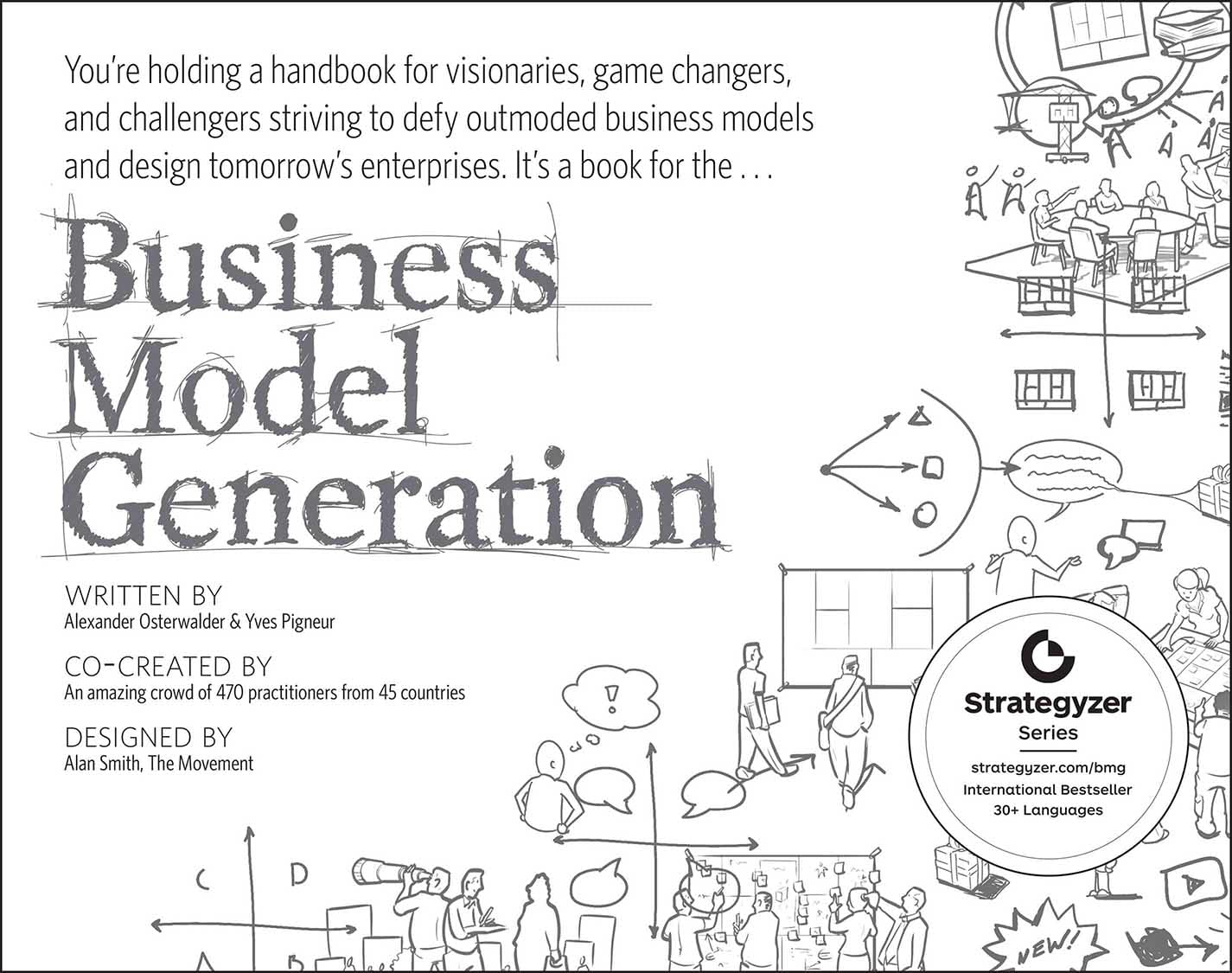
Business Model Generation: A Handbook for Visionaries, Game Changers, and Challengers
Business Model Generation is a handbook for visionaries, game changers, and challengers striving to defy outmoded business models and design tomorrow's enterprises. By Alex Osterwalder & Yves Pigneur.

The Mom Test: How to Talk to Customers & Learn if Your Business is a Good Idea
How to Talk to Customers & Learn if Your Business is a Good Idea by Rob Fitzpatrick.
Tools & Resources
Software and services to accelerate your Launch stage.
 tools
tools
Emergent.sh
Chat interface design tool for frontend and backend development. Coupon code: ROVNRMMG for 5% off on all payments
 tools
tools
Lovable.dev
AI-powered platform that builds full-stack web applications and websites from simple, natural language prompts.
 courses
Ikigai: The Japanese Secret to a Long and Happy Life Hardcover
Ikigai: The Japanese Secret to a Long and Happy Life explores the Japanese concept of ikigai—the overlap of what you love, what you're good at, what you can be paid for, and what the world needs—as the key to a happier and longer life.
 tools
tools
Qoder
Qoder is a next-generation AI-powered coding platform developed by Alibaba, designed to go beyond simple code completion and act as an agentic coding environment for real-world software development. Here’s what makes it unique:
 courses
The Power of Regret: How Looking Backward Moves Us Forward
The Power of Regret: How Looking Backward Moves Us Forward
 software
ActiveCampaign: Autonomous Marketing Automation & CRM for Strategic Growth
Power every marketing experience, including email campaigns, SMS automation, and WhatsApp messaging, with Active Intelligence that imagines, activates, and validates for you.
Some links are affiliate links. We may earn a small commission at no extra cost to you.
Next Steps
Once you've launched successfully, you're ready to build Growth Systems in Playbook 07. The data you collected during post-launch stabilization -- activation rates, channel performance, retention curves, and unit economics -- becomes the foundation for designing scalable growth loops.
Ready for Traction & Growth?
You've launched. Now it's time to build systematic, scalable growth.
Go to Playbook 07: Traction & GrowthSave Your Progress
Create a free account to save your reading progress, bookmark chapters, and unlock Playbooks 04-08 (MVP, Launch, Growth & Funding).
Get Access to Launch Tools
Sign up free to use 50+ AI-powered tools for launch execution.
Start Free TodayRelated Guides
Lean Startup Guide
Master the build-measure-learn loop and the foundations of validated learning to build products people actually want.
From Layoff to Launch
A step-by-step guide to turning industry expertise into a thriving professional practice after a layoff.
Fintech Playbook
Master regulatory moats, ledger architecture, and BaaS partnerships to build successful fintech products.
Works Cited & Recommended Reading
Lean Startup Methodology
- 1. "Methodology - The Lean Startup." The Lean Startup
- 2. "How to Use the Build, Measure, Learn Loop." Userpilot
Launch Readiness & Strategy
- 3. "Goals, Readiness and Constraints: The Three Dimensions of a Product Launch." Pragmatic Institute
- 4. "I Launched a SaaS and Failed - Here's What I Learned." Reddit
- 5. "SaaS Product Development Checklist: From Idea to Launch." Dev.Pro
- 6. "10 Biggest SaaS Challenges: How to Protect Your Business." Userpilot
Metrics & KPIs
- 7. "The Essential Guide to Product Launch Metrics." Gainsight
- 8. "Product launch plan template for SaaS and B2B marketing teams." Understory Agency
- 9. "SaaS Metrics Dashboard Examples and When to Use Them." UXCam
- 10. "B2B SaaS Product Launch Checklist 2025: No-Fluff & AI-Ready." GTM Buddy
- 11. "The Pre-Launch Metrics Imperative." Venture for All
- 12. "Average Resolution Time | KPI example." Geckoboard
- 13. "Burn rate is a better error rate." Datadog
Stakeholder Alignment
- 14. "Coordinate product launches with internal stakeholders." Product Marketing Alliance
- 15. "Comprehensive SaaS Product Readiness Checklist." Default
- 16. "Launching with stakeholders - Open-source product playbook." Coda
- 17. "Product launch checklist: How to ensure a successful launch." Atlassian
Launch Checklists & Process
- 18. "Product Launch Checklist Guide + Free Template." Product School
- 19. "SaaS Launch Checklist 2025: Steps for a Flawless Launch." Hexagon IT Solutions
Runbooks & Execution
- 20. "Runbook Example: A Best Practices Guide." Nobl9
- 21. "10 Steps for a Successful SaaS Product Launch Day." Scenic West Design
- 22. "SaaS Outages: When Lightning Strikes, Thunder Rolls." Forrester
- 23. "Developer-Friendly Runbooks: A Guide." Medium
- 24. "Your Essential Product Launch Checklist Template." VeryCreatives
- 25. "87-Action-Item Product Launch Checklist." Ignition
Press Kits & Marketing Assets
- 26. "How to Build a SaaS Media Kit for Your Brand." Webstacks
- 27. "Press Kit: What It Is, Templates & 10+ Examples For 2025." Prezly
- 28. "How I Won #1 Product of The Day on Product Hunt." Microns.io
Messaging Frameworks
- 29. "Product messaging: Guide to frameworks, strategy, and examples." PMA
- 30. "Product Messaging Framework: A Guide for Ambitious PMMs." Product School
Runbook Templates & Automation
- 31. "15 Steps to Create a Runbook for your Team." Document360
- 32. "Free Product Launch Plan Templates." Smartsheet
- 33. "DevOps runbook template | Confluence." Atlassian
- 34. "Runbook - SaaS Lens." AWS Well-Architected
- 35. "Runbook Template: Best Practices & an Example." SolarWinds
- 36. "How to Launch on Product Hunt (Playbook to #1)." Swipe Files
- 37. "Automation 101 with Runbook Automation." YouTube
- 38. "Runbook Template: Best Practices & Examples." Doctor Droid
Dashboards & Real-Time Monitoring
- 39. "8 SaaS Dashboard Examples to Track Key Metrics." Userpilot
- 40. "Real-time dashboards: are they worth it?" Tinybird
- 41. "Incident Management - MTBF, MTTR, MTTA, and MTTF." Atlassian
- 42. "SaaS Metrics Dashboard: Your Revenue Command Center." Rework
- 43. "12 product adoption metrics to track for success." Appcues
Crisis Communication
- 44. "How to Create a Crisis Communication Plan." Everbridge
- 45. "10 Crisis Communication Templates for Every Agency Owner." CoSchedule
- 46. "Your Complete Crisis Communication Plan Template." Ready Response
- 47. "Crisis communications: What it is and examples brands can learn from." Sprout Social
Retrospectives & Learning
- 48. "What the 'Lean Startup' didn't tell me - 3 iterations in." Reddit
- 49. "Does Your Product Launch Strategy Include Retrospectives?" UserVoice
- 50. "Retrospective Templates for Efficient Team Meetings." Miro
- 51. "50+ Retrospective Questions for your Next Meeting." Parabol
- 52. "Quick Wins for Product Managers." Medium
- 53. "Showcase Early Wins for Successful Product Adoption." Profit.co
Observability & Tooling
- 54. "The Lean Startup Method 101: The Essential Ideas." Lean Startup Co
- 55. "Grafana: The open and composable observability platform." Grafana Labs
- 56. "The essential product launch checklist for SaaS companies | 2025." Orb Billing
This playbook synthesizes methodologies from DevOps, Site Reliability Engineering (SRE), Incident Command System (ICS), and modern product management practices. References are provided for deeper exploration of each topic.