Unlock This Playbook
Create a free account to access execution playbooks
Already have an account? Sign in
Tools & Resources
AI-powered tools and recommended resources for Go-To-Market Strategy.
Your Go-To-Market Toolkit
Strategy without execution is a wish list. This chapter provides the practical tools that turn the GTM frameworks from previous chapters into operational reality -- channel by channel, metric by metric, experiment by experiment.
Throughout this playbook, we have referenced specific LeanPivot AI tools at the moments where they are most useful. This chapter brings them all together in one place, organized by the phase of your go-to-market journey they support, with guidance on which to use when and how their outputs feed into each other. Think of this as the equipment list for your market entry expedition -- you will not need every tool for every situation, but having the right tool at the right moment dramatically improves your odds of finding a repeatable acquisition channel before your runway runs out.
A note on tool sequencing: go-to-market strategy is inherently iterative. Your persona research will reveal positioning opportunities. Your competitive analysis will surface channel gaps. Your channel tests will generate pricing insights. Your pricing experiments will refine your understanding of your customer persona. The tools below are designed to support this feedback loop, and each one produces outputs that become inputs for other tools in the chain.
Recommended Workflow
Use these tools in sequence for best results. Each tool's output becomes the next tool's input:
- Customer Persona -- Start here. Refine your ideal customer profile by identifying your high-expectation customer (HXC) -- the person who will love your product so much they tell others about it. The persona output drives every subsequent decision about channels, messaging, and pricing. Without a clear HXC, your channel selection and messaging will be generic and ineffective.
- Competitive Deep Dive -- Map the competitive landscape to identify positioning white space. Understand how competitors acquire customers, what channels they dominate, and where opportunities exist for differentiation. This analysis prevents you from fighting expensive battles on terrain your competitors already own.
- Early Adopter Identifier -- Narrow your focus to the specific segment most likely to adopt first. Early adopters are not your total addressable market -- they are the beachhead that proves your GTM model works before you scale it. This tool identifies where they congregate and how to reach them.
- Channel Testing Framework -- Design structured experiments across two to three candidate channels. Each experiment should have a clear hypothesis, budget, timeline, and success threshold defined before you spend a dollar. The Bullseye Framework ensures you test systematically rather than guessing.
- Pricing Test Designer -- Validate your pricing model with real market data. Test willingness to pay, price sensitivity, and packaging options before locking in your pricing page. A 10% improvement in pricing typically has a larger impact on profitability than a 10% improvement in customer acquisition.
- Sales Playbook Builder -- Codify your winning sales process into a repeatable playbook. Document objection handling, qualification criteria, and close sequences so every conversation follows the pattern that converts. Essential before hiring your first sales rep.
- Launch Campaign Planner -- Orchestrate your launch across channels, timing, and messaging. Coordinate your early adopter outreach, content calendar, and paid acquisition for maximum launch impact.
- Growth Strategy Architect -- Design sustainable growth loops that compound over time. Move beyond one-off campaigns to build engines where each new customer contributes to acquiring the next one.
Choosing the Right Tool for the Right Question
Different GTM questions require different tools. Use this quick-reference table to identify which tool addresses which type of strategic uncertainty:
| Question You're Asking | Best Tool | Output Produced |
|---|---|---|
| "Who is my ideal first customer?" | HXC profile with psychographics | |
| "How do competitors acquire customers?" | Competitive channel map | |
| "Where should I find early adopters?" | Segment prioritization matrix | |
| "Which channels should I invest in?" | Channel experiment plan | |
| "What should I charge?" | Pricing model with WTP data | |
| "How do I close deals consistently?" | Repeatable sales process | |
| "How do I build sustainable growth?" | Growth loop design | |
| "Is my unit economics viable?" | Unit economics dashboard |
GTM Tools by Phase
Your go-to-market journey breaks into three distinct phases, each with its own objectives and toolset. Resist the temptation to skip ahead -- the outputs of each phase become critical inputs for the next.
Phase 1: Define and Research
Before you spend a single dollar on acquisition, invest time in understanding who you are selling to, who you are competing against, and where your positioning advantage lives. Founders who skip this phase end up spending three to five times more on customer acquisition because they are targeting the wrong people with the wrong message in the wrong channels. Phase 1 corresponds to the persona, positioning, and competitive analysis chapters of this playbook.
| Tool | Primary Task | Key Input | Key Output |
|---|---|---|---|
| Customer Persona | Define your high-expectation customer profile | Business model, market research, interview data | Detailed HXC persona with pain points and buying triggers |
| Competitive Deep Dive | Map competitor channels, pricing, and positioning | Competitor list, market category | Competitive landscape map with white-space opportunities |
| Early Adopter Identifier | Pinpoint your beachhead segment | Customer persona, problem validation data | Prioritized early adopter segments with outreach strategies |
Research Phase Tools
Start your GTM strategy with deep customer and competitive research. These tools build the foundation that every channel, pricing, and messaging decision rests on.
Phase 2: Channel Selection and Testing
With your persona defined and competitive landscape mapped, Phase 2 is about designing structured experiments to identify which acquisition channels will work for your specific product and market. The cardinal rule of channel testing: never bet your budget on a single channel before you have data. Run small, time-boxed experiments across two to three candidates, measure rigorously, and double down on what works. This phase corresponds to the Bullseye Framework, pricing strategy, and sales process chapters.
| Tool | Primary Task | Key Input | Key Output |
|---|---|---|---|
| Channel Testing Framework | Design and run channel experiments | Target persona, budget, candidate channels | Experiment plans with hypotheses and success thresholds |
| Pricing Test Designer | Validate pricing model and willingness to pay | Value proposition, competitive pricing, customer segments | Pricing model with Van Westendorp or conjoint analysis results |
| Sales Playbook Builder | Codify repeatable sales process | Winning conversations, objection patterns, close data | Complete sales playbook with scripts and qualification criteria |
| Launch Campaign Planner | Orchestrate multi-channel launch | Channel test results, messaging, timeline | Coordinated launch plan with content calendar and milestones |
Channel Testing Tools
Test channels systematically before committing budget. These tools ensure every experiment has clear hypotheses and measurable outcomes.
Phase 3: Growth Engine and Optimization
Once you have identified a working channel and validated your pricing, Phase 3 shifts from experimentation to optimization. The goal is no longer to find what works -- it is to make what works scale sustainably. This means building growth loops where each customer helps acquire the next, optimizing unit economics where CAC stays well below LTV, and systematically removing friction from your activation and retention funnels. This phase corresponds to the growth engine design and scaling chapters.
| Tool | Primary Task | Key Input | Key Output |
|---|---|---|---|
| Channel Optimizer | Scale and optimize proven channels | Channel test results, conversion data | Optimization playbook with scaling recommendations |
| CAC/LTV Model | Model unit economics and payback period | Acquisition costs, revenue data, churn rates | Unit economics dashboard with scenario analysis |
| Growth Strategy Architect | Design compounding growth loops | Product mechanics, user behavior data | Growth loop blueprints with lever identification |
| Viral Growth Engine | Build referral and virality mechanics | Product usage patterns, sharing opportunities | Viral loop design with K-factor projections |
| Activation Optimizer | Improve new user activation rates | Onboarding data, drop-off analysis | Optimized activation flow with experiment suggestions |
| Retention Diagnostic | Identify and fix retention leaks | Cohort data, churn reasons, usage patterns | Retention improvement roadmap with prioritized fixes |
Growth Optimization Tools
Scale what works and build sustainable growth engines. These tools help you move from one-off campaigns to compounding growth loops.
Tool-by-Tool Deep Dive
Below is a detailed look at each core GTM tool, including when to use it, what inputs it needs, and how to interpret its outputs. Each tool is mapped to the specific playbook chapters where its underlying framework is explained.
Customer Persona
When to use: At the very start of your GTM planning, before any channel or pricing decisions. Revisit after every round of customer interviews or when pivoting to a new segment.
What it does: Generates a comprehensive ideal customer profile that goes beyond demographics to include psychographics, buying triggers, information sources, objection patterns, and the specific jobs to be done that drive purchase decisions. The tool identifies your High-Expectation Customer -- the person who will become your most passionate advocate.
Key output: A detailed persona document with pain points ranked by severity, buying journey stages, preferred communication channels, and messaging hooks that resonate with this specific segment.
Framework reference: Chapter 2 covers ICP development, the High-Expectation Customer framework, and persona-to-channel mapping.
Competitive Deep Dive
When to use: After defining your persona and before selecting channels. Run again whenever a new competitor enters your space or an existing competitor changes strategy.
What it does: Analyzes your competitive landscape across multiple dimensions: positioning, pricing, channel strategy, content approach, and customer sentiment. Identifies gaps in the market where no competitor has strong positioning -- these gaps are your strategic opportunities.
Key output: A competitive landscape matrix showing positioning white space, a channel opportunity map highlighting underserved channels, and specific recommendations for differentiation based on competitor weaknesses.
Framework reference: Chapter 3 covers competitive positioning, blue ocean strategy principles, and the positioning canvas.
Early Adopter Identifier
When to use: After persona development and competitive analysis. Use this to narrow your focus from "everyone who could use this" to "the specific people who will adopt first."
What it does: Applies the Technology Adoption Lifecycle to your specific market to identify the innovators and early adopters who will try your product before it has social proof. Analyzes factors like problem urgency, switching costs, technology comfort, and budget authority to rank segments by adoption likelihood.
Key output: A prioritized list of early adopter segments with outreach strategies, community recommendations, and messaging templates tailored to each segment's motivations.
Framework reference: Chapter 2 covers the beachhead market concept, crossing the chasm strategy, and early adopter identification techniques.
Channel Testing Framework
When to use: When you have identified two to three candidate channels and need to determine which one will be your primary acquisition engine. Run before committing significant budget to any single channel.
What it does: Structures channel experiments using the Bullseye Framework methodology. For each candidate channel, the tool generates a complete experiment design including hypothesis, budget allocation, timeline, creative requirements, targeting parameters, and pre-defined success thresholds.
Key output: A structured experiment plan for each channel with clear pass/fail criteria, budget recommendations, and a scoring rubric for comparing results across channels.
Framework reference: Chapter 4 covers the Bullseye Framework, channel categorization, and the ICE scoring model for experiment prioritization.
Pricing Test Designer
When to use: After you have a working product and initial customer conversations, but before publishing your pricing page. Also useful when considering price changes or launching new tiers.
What it does: Designs pricing experiments using proven methodologies including Van Westendorp Price Sensitivity analysis, Gabor-Granger pricing studies, and conjoint analysis for feature-based pricing. The tool recommends the right methodology based on your product type, market maturity, and available sample size.
Key output: A pricing experiment design with survey instruments, analysis templates, and a decision framework for interpreting results. Includes benchmark data for your product category.
Framework reference: Chapter 5 covers pricing psychology, value-based pricing, and the Van Westendorp methodology.
Sales Playbook Builder
When to use: After you have closed your first 10-15 customers manually and can identify patterns in what works. Essential before hiring your first sales rep or scaling outbound.
What it does: Transforms your ad hoc sales conversations into a documented, repeatable process. Captures your qualification framework, maps the typical buyer journey, documents common objections with proven responses, and creates email and call scripts for each stage of the sales cycle.
Key output: A complete sales playbook including qualification criteria, objection handling scripts, email sequences, call frameworks, and close techniques -- ready to hand to a new sales hire.
Framework reference: Chapter 6 covers founder-led sales, the sales learning curve, and scaling from manual to systematized selling.
Launch Campaign Planner
When to use: Four to six weeks before your target launch date. Use this to coordinate all launch activities across channels, content, outreach, and paid acquisition into a single timeline.
What it does: Creates a comprehensive launch plan that coordinates pre-launch buzz building, launch day execution, and post-launch follow-up. Includes content calendar templates, email sequence designs, social media scheduling, influencer outreach templates, and paid ad campaign structures.
Key output: A week-by-week launch timeline with specific tasks, content pieces, email sends, and ad campaigns mapped to milestones and success metrics.
Framework reference: Chapter 7 covers launch strategy, the pre-launch flywheel, and post-launch measurement frameworks.
Growth Strategy Architect
When to use: After initial traction proves that your product has demand and at least one channel works. This tool shifts your thinking from campaign-based growth to loop-based growth.
What it does: Analyzes your product mechanics, user behavior, and market dynamics to identify potential growth loops -- viral, content, paid, and sales-led. For each viable loop, it maps the complete cycle: trigger, action, output, and re-entry. It identifies the bottleneck lever that would have the greatest impact on growth rate.
Key output: A set of growth loop blueprints with specific lever identification, optimization priorities, and projected impact of improvements at each stage of the loop.
Framework reference: Chapter 8 covers growth loops, the AARRR framework, and sustainable versus unsustainable growth patterns.
CAC/LTV Model
When to use: As soon as you have enough data to estimate customer acquisition cost and lifetime value -- typically after 50-100 paying customers. Revisit monthly as your data improves.
What it does: Builds a comprehensive unit economics model that calculates customer acquisition cost by channel, customer lifetime value by segment, payback period, and the critical LTV-to-CAC ratio. Includes scenario modeling so you can see how changes in churn rate, ARPU, or acquisition efficiency affect your economics.
Key output: A unit economics dashboard showing CAC, LTV, payback period, and LTV:CAC ratio by channel and segment, with break-even analysis and improvement recommendations.
Framework reference: Chapter 5 covers unit economics fundamentals, the LTV:CAC ratio, and payback period benchmarks by business model.
Viral Growth Engine
When to use: When your product has natural sharing moments or when you want to reduce CAC by adding a referral or virality layer to your growth model.
What it does: Identifies the viral hooks embedded in your product experience -- the moments where users are most likely to share, invite, or create content that attracts new users. Designs referral mechanics, calculates your viral coefficient (K-factor), and models the impact of different incentive structures.
Key output: A viral loop design with K-factor projections, incentive recommendations, and specific product changes that would increase organic sharing.
Framework reference: Chapter 8 covers viral loops, the K-factor formula, and case studies of products with built-in virality.
Common Tool Usage Mistakes
Tools accelerate your GTM process, but only when used correctly. These are the most common mistakes founders make when using go-to-market tools -- even experienced ones:
Avoid Channel Spray
Resist the temptation to test six channels at once with tiny budgets. Spreading $1,000 across five channels gives you $200 each -- not enough to generate statistically meaningful data on any of them. Instead, pick two to three channels based on your competitive analysis and give each one enough budget and time (typically $500-1,000 and two to four weeks) to produce a reliable signal. A definitive answer on two channels is worth far more than ambiguous signals on five.
Avoid Pricing by Gut
Pricing is one of the highest-leverage decisions in your entire GTM strategy, yet most founders set prices based on intuition or competitive matching without any customer data. Underpricing leaves money on the table and signals low value. Overpricing kills conversion without you knowing why. Use the Pricing Test Designer to gather real willingness-to-pay data before committing to a price point. Even a simple Van Westendorp survey with 30-50 responses provides dramatically better data than your best guess.
Avoid Skipping Persona Work
Jumping straight to channel testing without a well-defined customer persona is like starting a road trip without a destination. You will drive somewhere, but it probably will not be the right place. Every channel decision, every piece of copy, every pricing tier depends on knowing exactly who you are targeting. Spend time with the Customer Persona tool before touching any other GTM tool. The thirty minutes you invest here saves hundreds of hours of misdirected effort downstream.
Avoid Ignoring Unit Economics
A channel that generates customers is not necessarily a good channel. If your customer acquisition cost exceeds your lifetime value, you lose money on every customer and cannot make it up in volume. Run the CAC/LTV Model early and often. The most dangerous scenario is a channel that feels like it is working because sign-ups are growing, but is actually destroying value because acquisition costs are unsustainable. Know your numbers before you scale.
Avoid Premature Scaling
Do not pour money into a channel before you have proven the entire funnel works. A channel test that generates clicks but no conversions does not mean the channel is bad -- it might mean your landing page, pricing, or onboarding is broken. Validate the complete journey from first touch to paying customer before increasing spend. The Growth Strategy Architect tool helps you identify which stage of the funnel is the true bottleneck so you fix the right problem.
External Resources and Frameworks
The tools above operationalize the frameworks covered in this playbook. If you want to go deeper on any topic, these are the foundational resources that informed our approach:
Essential Books
- Traction by Gabriel Weinberg and Justin Mares -- The definitive guide to the Bullseye Framework for channel selection. Covers all 19 traction channels with testing methodology for each one.
- Obviously Awesome by April Dunford -- The best practical guide to positioning. Essential for understanding how to differentiate in a competitive market.
- Crossing the Chasm by Geoffrey Moore -- The classic on moving from early adopters to mainstream market. Critical for understanding why early traction does not guarantee long-term growth.
- Hacking Growth by Sean Ellis and Morgan Brown -- The playbook for building growth teams and running systematic growth experiments across the full funnel.
- Monetizing Innovation by Madhavan Ramanujam and Georg Tacke -- The gold standard on pricing strategy for new products, including willingness-to-pay research methodology.
Online Resources and Frameworks
- Reforge (reforge.com) -- Advanced programs on growth strategy, retention, and acquisition. The growth loops framework used in this playbook originated here.
- Lenny's Newsletter (lennysnewsletter.com) -- Benchmarks for conversion rates, pricing, and growth metrics across hundreds of startups. Essential for setting realistic targets.
- First Round Review (review.firstround.com) -- In-depth case studies on GTM strategy from companies like Notion, Figma, and Stripe.
- Andrew Chen's Blog (andrewchen.com) -- Deep dives on growth loops, viral mechanics, marketplace dynamics, and the network effects that drive sustainable growth.
- ForEntrepreneurs (forentrepreneurs.com) -- David Skok's comprehensive guides on SaaS metrics, unit economics, and go-to-market strategy for B2B companies.
Complementary External Tools
Beyond the LeanPivot toolkit, these complementary tools support the GTM workflow at different stages:
| Category | Purpose | Recommended Tools |
|---|---|---|
| Landing Pages | Build high-converting pages for channel tests | Webflow, Framer, Unbounce, Carrd |
| Analytics | Track funnel metrics and user behavior | Mixpanel, Amplitude, PostHog, Google Analytics |
| Email Marketing | Nurture leads and run drip campaigns | ConvertKit, Mailchimp, Customer.io, Loops |
| Paid Acquisition | Run channel tests on paid platforms | Google Ads, Meta Ads, LinkedIn Ads, Reddit Ads |
| CRM | Track sales pipeline and customer relationships | HubSpot (Free), Pipedrive, Close, Attio |
| Social Proof | Collect and display testimonials and reviews | Testimonial.to, TrustPilot, G2 |
| Competitive Intelligence | Monitor competitor activity and market trends | SimilarWeb, SpyFu, Semrush, BuiltWith |
LeanPivot AI Tools
AI-powered tools to help you execute this stage faster.
Go-to-Market Strategy
Comprehensive GTM planning with AI.
Channel Testing Generator
Design channel experiments to find what works.
Pricing Test Generator
Test pricing strategies with customers.
Sales Playbook Generator
Create repeatable sales processes.
Early Adopter Strategy
Find and convert your first customers.
Launch Campaign Generator
Plan marketing campaigns for launch.
Recommended External Tools
Third-party tools that complement this stage of your journey.
Recommended Reading
Essential books for the Launch stage.

Traction: How Any Startup Can Achieve Explosive Growth
Gabriel Weinberg's playbook for getting customers. 19 traction channels explained.

Running Lean: Iterate from Plan A to a Plan That Works
Ash Maurya's practical guide to Lean Canvas and continuous innovation.
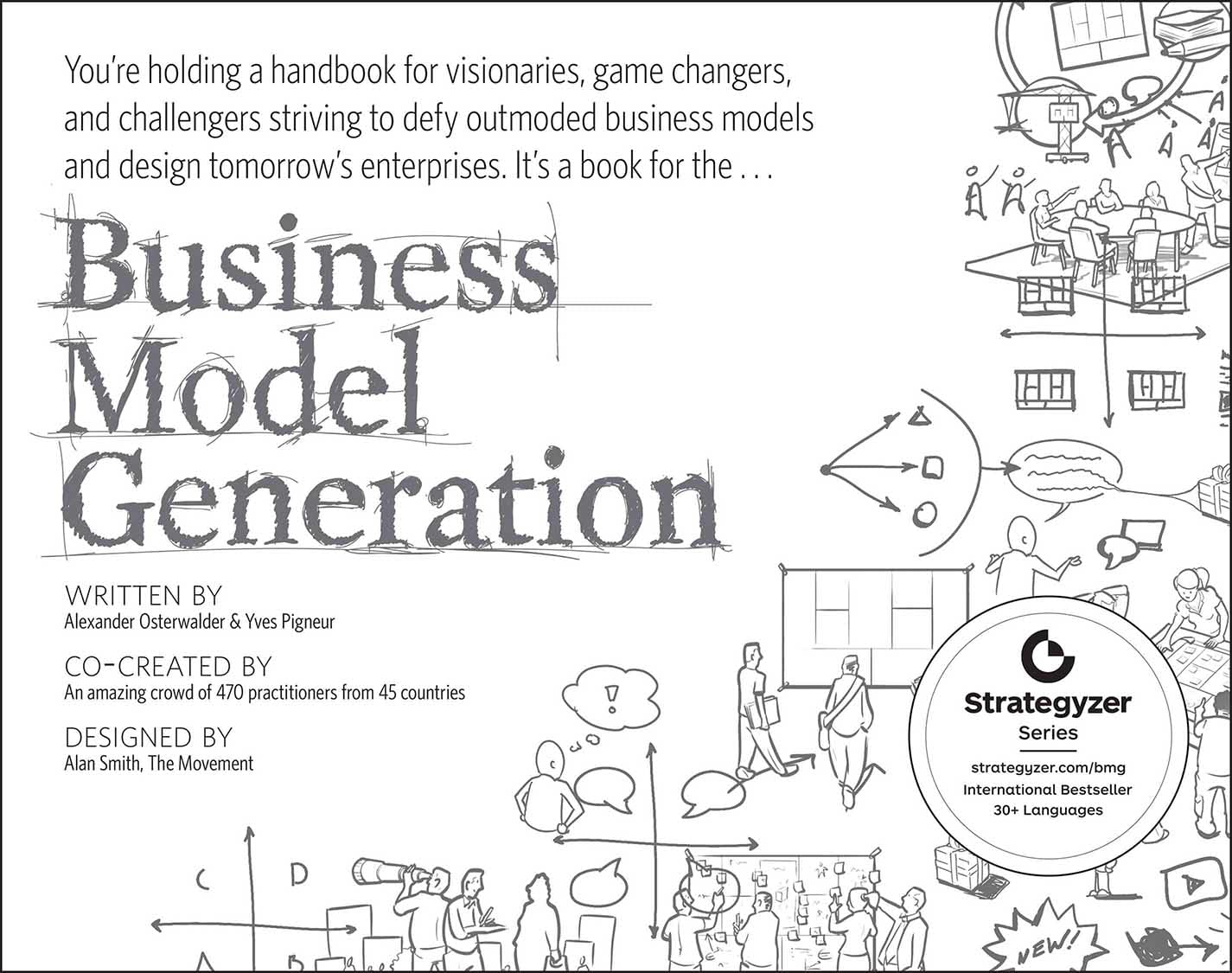
Business Model Generation: A Handbook for Visionaries, Game Changers, and Challengers
Business Model Generation is a handbook for visionaries, game changers, and challengers striving to defy outmoded business models and design tomorrow's enterprises. By Alex Osterwalder & Yves Pigneur.

The Mom Test: How to Talk to Customers & Learn if Your Business is a Good Idea
How to Talk to Customers & Learn if Your Business is a Good Idea by Rob Fitzpatrick.
Tools & Resources
Software and services to accelerate your Launch stage.
 tools
tools
Emergent.sh
Chat interface design tool for frontend and backend development. Coupon code: ROVNRMMG for 5% off on all payments
 tools
tools
Lovable.dev
AI-powered platform that builds full-stack web applications and websites from simple, natural language prompts.
 courses
Ikigai: The Japanese Secret to a Long and Happy Life Hardcover
Ikigai: The Japanese Secret to a Long and Happy Life explores the Japanese concept of ikigai—the overlap of what you love, what you're good at, what you can be paid for, and what the world needs—as the key to a happier and longer life.
 tools
tools
Qoder
Qoder is a next-generation AI-powered coding platform developed by Alibaba, designed to go beyond simple code completion and act as an agentic coding environment for real-world software development. Here’s what makes it unique:
 courses
The Power of Regret: How Looking Backward Moves Us Forward
The Power of Regret: How Looking Backward Moves Us Forward
 software
ActiveCampaign: Autonomous Marketing Automation & CRM for Strategic Growth
Power every marketing experience, including email campaigns, SMS automation, and WhatsApp messaging, with Active Intelligence that imagines, activates, and validates for you.
Some links are affiliate links. We may earn a small commission at no extra cost to you.
Next Steps
Once your GTM strategy is defined and your initial channel experiments show traction, you are ready to execute your Launch in Playbook 06. The transition from "How will I reach customers?" (Playbook 05) to "Let's execute the launch" (Playbook 06) is where strategy meets reality. Everything you have planned and tested in this playbook feeds directly into your launch execution plan.
Ready to Launch?
Your GTM strategy is defined. Your channels are tested. Your pricing is validated. Now it is time to orchestrate a launch that converts your preparation into customers, revenue, and momentum.
Go to Playbook 06: Launch & ExecutionSave Your Progress
Create a free account to save your reading progress, bookmark chapters, and unlock Playbooks 04-08 (MVP, Launch, Growth & Funding).
Get Access to GTM Tools
Sign up free to use 50+ AI-powered tools for go-to-market strategy.
Start Free TodayRelated Guides
Lean Startup Guide
Master the build-measure-learn loop and the foundations of validated learning to build products people actually want.
From Layoff to Launch
A step-by-step guide to turning industry expertise into a thriving professional practice after a layoff.
Fintech Playbook
Master regulatory moats, ledger architecture, and BaaS partnerships to build successful fintech products.