Unlock This Playbook
Create a free account to access execution playbooks
Already have an account? Sign in
Tools & Resources
AI-powered tools and recommended resources for MVP & Solution Design.
The MVP Design Toolkit
Building a product that learns requires more than frameworks and theory. You need practical tools that help you execute the methodologies described in this playbook -- tools that help you map assumptions, prioritize features, design experiments, choose technology, and measure results. This chapter provides a curated toolkit organized by the phase of your MVP journey, with specific guidance on when to use each tool and how they connect to the concepts you have learned.
The tools listed here are not theoretical -- they are the same tools used by the practitioners and companies referenced throughout this playbook. The difference is that LeanPivot's AI-powered versions accelerate the process by providing intelligent defaults, contextual recommendations, and automated analysis that would otherwise require hours of manual work. Think of them as a co-pilot for each phase of your MVP journey.
Recommended Workflow
Work through these tools in sequence to design, build, and launch your minimum viable product. Each tool builds on the output of the previous one:
- Assumption Mapping -- Identify and prioritize the beliefs underlying your business (Chapter 2)
- Market Signal Test -- Validate demand before building using Fake Door experiments (Chapter 3)
- Feature Prioritization Matrix -- Apply MoSCoW, Kano, and RICE to scope your MVP (Chapter 4)
- User Story Generator -- Define user requirements and create story maps for end-to-end completeness
- Tech Stack Advisor -- Choose the right technology stack for your stage and requirements
- PRD Generator -- Document your product requirements, scope boundaries, and success criteria
- MVP Cost Forecaster -- Estimate development costs and timeline to set realistic expectations
- Launch Readiness -- Ensure your Go/No-Go criteria are met before inviting beta users (Chapter 5)
- Pirate Metrics (AARRR) -- Define your metrics stack and identify your North Star (Chapter 6)
- Pivot Compass -- Analyze post-launch data and make the Persevere/Pivot/Kill decision (Chapter 7)
Phase 1: Validate Before Building
Before writing a single line of code, use these tools to test your riskiest assumptions and validate demand. As discussed in Chapters 1-3, the most expensive mistake in entrepreneurship is building something nobody wants. These tools prevent that mistake by forcing you to gather evidence before committing resources.
Assumption Mapping
Extract, categorize, and prioritize the assumptions underlying your business. Identifies your Kill Zone assumptions and suggests appropriate experiment designs for each one.
When to use: Before any building begins. Revisit monthly as you learn.
Open ToolMarket Signal Test
Design and analyze Fake Door experiments to measure real market demand. Includes recommended ad spend, audience targeting, and statistical significance calculations.
When to use: To validate demand before building. Budget: $200-500 for initial signal.
Open ToolProblem-Solution Fit
Analyze whether your proposed solution actually addresses the problem your customers care about. Scores fit across desirability, viability, and feasibility dimensions.
When to use: After customer interviews, before designing the solution.
Open ToolSurvey Designer
Create scientifically rigorous surveys for customer discovery and validation. Includes question templates, bias avoidance guidance, and sample size recommendations.
When to use: For quantitative validation of problems and willingness to pay.
Open ToolPhase 2: Design Your MVP
Once you have validated demand and identified the right problem to solve, these tools help you design the most effective minimum viable product. The goal is to build only what is necessary to test your solution hypothesis -- no more, no less. As Chapter 4 emphasized, saying "no" to features is more important than saying "yes."
Feature Prioritization
Apply MoSCoW, Kano, and RICE frameworks to your feature backlog. AI-powered recommendations challenge your categorizations and suggest what to cut.
When to use: When defining MVP scope. Your "Must Have" list should have 3-5 items maximum.
Open ToolUser Story Generator
Create and organize user stories across your entire journey map. Ensures end-to-end completeness and identifies gaps where users would get stuck.
When to use: After feature prioritization. Maps to the User Story Mapping technique from Chapter 2.
Open ToolTech Stack Advisor
Evaluate build-vs-buy decisions and choose the right technology stack. Recommends the optimal combination of custom code and third-party services for your stage.
When to use: Before starting development. Prevents the "build commodities" trap from Chapter 4.
Open ToolPRD Generator
Create a comprehensive product requirements document that captures scope, constraints, success criteria, and technical specifications in a team-aligned format.
When to use: After feature prioritization and tech stack selection. Before development begins.
Open ToolPrototype Generator
Quickly create realistic mockups and wireframes for Wizard of Oz experiments or stakeholder alignment. No design skills required.
When to use: For pretotyping experiments (Chapter 3) or to align your team on the MVP design.
Open ToolMVP Cost Forecaster
Estimate development costs and timeline based on your feature set, tech stack, and team composition. Helps set realistic expectations with stakeholders.
When to use: After defining scope and tech stack. Before committing budget.
Open ToolPhase 3: Launch and Measure
With your MVP built, these tools help you execute a disciplined launch, measure what matters, and make data-driven decisions about your product's future. As Chapters 5-7 emphasized, the launch is a learning event, metrics must be actionable, and post-launch decisions must be objective.
Launch Readiness
A comprehensive Go/No-Go assessment tailored to your product type and business model. Flags potential blockers across product, engineering, legal, and operations.
When to use: Before inviting your first beta user. Maps to the Go/No-Go checklist from Chapter 5.
Open ToolPirate Metrics (AARRR)
Define and track metrics across all five funnel stages. Identifies your biggest bottleneck so you focus improvement efforts where they will have the most impact.
When to use: During launch preparation. Review weekly during beta. Maps to Chapter 6.
Open ToolUsability Testing
Structured templates for friction log sessions, including task scripts, observation frameworks, and prioritization matrices for product improvements.
When to use: During beta testing. Five sessions uncover 85% of usability problems.
Open ToolPivot Compass
Analyze your post-launch metrics and get objective guidance on whether to persevere, pivot, or kill. Uses the decision scorecard framework from Chapter 7.
When to use: After 6-8 weeks of beta data. Maps to the Persevere/Pivot/Kill framework.
Open ToolCommon Pitfalls When Using These Tools
Tools are only as effective as the thinking behind them. Here are the most common mistakes founders make when using MVP design tools, and how to avoid them:
Avoid Feature Creep
Build the minimum that tests your hypothesis, not your dream product. If your feature prioritization produces more than 5 "Must Have" items, you are being too generous with that category. Challenge each one by asking: "Would the product be useless without this, or just inconvenient?"
Avoid Over-Engineering
Choose simple solutions. You can scale later when you have traction. 99% of startups never hit the limits of no-code platforms. Do not spend weeks optimizing for scale you may never reach.
Avoid Tool Paralysis
Tools should accelerate your process, not replace action. If you spend more time configuring tools than talking to customers, you have the ratio wrong. The best tool is a conversation with a real user.
Avoid Skipping Validation
Do not jump straight to Phase 2 (Design) without completing Phase 1 (Validate). The tools in Phase 2 assume you have evidence that the problem is real and the demand exists. Without that evidence, you risk designing a beautiful solution to a problem nobody has.
LeanPivot AI Tools
AI-powered tools to help you execute this stage faster.
PRD Generator
Create product requirements documents with AI.
Feature Prioritization
Prioritize features using RICE framework.
Tech Stack Advisor
Choose the right technologies for your MVP.
User Story Generator
Write effective user stories for your backlog.
Usability Testing Script
Plan effective usability tests.
MVP Cost Forecaster
Estimate MVP development costs.
Recommended External Tools
Third-party tools that complement this stage of your journey.
Recommended Reading
Essential books for the Mvp stage.

Running Lean: Iterate from Plan A to a Plan That Works
Ash Maurya's practical guide to Lean Canvas and continuous innovation.
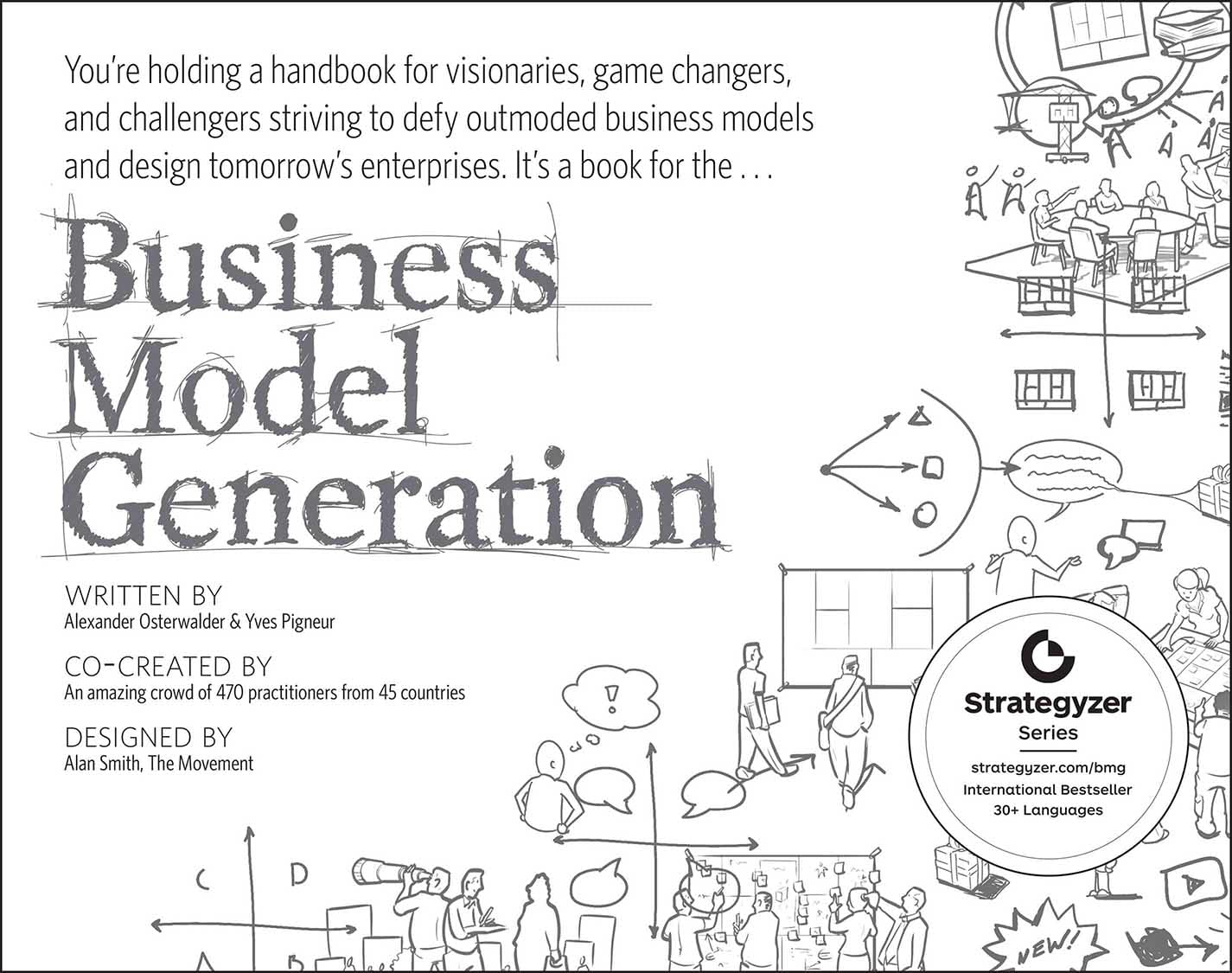
Business Model Generation: A Handbook for Visionaries, Game Changers, and Challengers
Business Model Generation is a handbook for visionaries, game changers, and challengers striving to defy outmoded business models and design tomorrow's enterprises. By Alex Osterwalder & Yves Pigneur.

Traction: How Any Startup Can Achieve Explosive Growth
Gabriel Weinberg's playbook for getting customers. 19 traction channels explained.

The Mom Test: How to Talk to Customers & Learn if Your Business is a Good Idea
How to Talk to Customers & Learn if Your Business is a Good Idea by Rob Fitzpatrick.
Tools & Resources
Software and services to accelerate your Mvp stage.
 tools
tools
Emergent.sh
Chat interface design tool for frontend and backend development. Coupon code: ROVNRMMG for 5% off on all payments
 tools
tools
Lovable.dev
AI-powered platform that builds full-stack web applications and websites from simple, natural language prompts.
 tools
tools
Qoder
Qoder is a next-generation AI-powered coding platform developed by Alibaba, designed to go beyond simple code completion and act as an agentic coding environment for real-world software development. Here’s what makes it unique:
 courses
Ikigai: The Japanese Secret to a Long and Happy Life Hardcover
Ikigai: The Japanese Secret to a Long and Happy Life explores the Japanese concept of ikigai—the overlap of what you love, what you're good at, what you can be paid for, and what the world needs—as the key to a happier and longer life.
 courses
The Power of Regret: How Looking Backward Moves Us Forward
The Power of Regret: How Looking Backward Moves Us Forward
 tools
tools
Auth0
Complete identity platform for secure authentication and authorization in your tech stack
Some links are affiliate links. We may earn a small commission at no extra cost to you.
Recommended Reading and External Resources
The tools above are informed by the methodologies and research from leading practitioners. For deeper dives into each framework, these are the essential references:
Essential Books
- The Lean Startup by Eric Ries -- The foundational text on validated learning and the Build-Measure-Learn loop
- The Right It by Alberto Savoia -- The definitive guide to pretotyping techniques
- Testing Business Ideas by David Bland & Alex Osterwalder -- A comprehensive catalog of experiment designs for business model validation
- Lean Analytics by Alistair Croll & Ben Yoskovitz -- The metrics bible for early-stage startups
- Continuous Discovery Habits by Teresa Torres -- Modern product discovery practices including Opportunity Solution Trees
Online Resources
- SVPG (svpg.com) -- Marty Cagan's Silicon Valley Product Group, essential reading on product management
- Product Talk (producttalk.org) -- Teresa Torres's blog on continuous discovery and Opportunity Solution Trees
- Reforge (reforge.com) -- Advanced programs on growth, retention, and product strategy
- Lenny's Newsletter (lennysnewsletter.com) -- Benchmarks, interviews, and tactical advice from top product leaders
- First Round Review (review.firstround.com) -- In-depth essays on startup building from First Round Capital's portfolio
Next Steps
Once your MVP is designed and you have validated your core hypotheses, you are ready to plan how you will reach customers and build sustainable growth. The next playbook covers go-to-market strategy, channel selection, and growth engine design.
Ready for Go-To-Market?
Your MVP is designed. Now it is time to plan how you will reach customers, position your product, and build your first growth channels.
Go to Playbook 05: Go-To-Market StrategySave Your Progress
Create a free account to save your reading progress, bookmark chapters, and unlock Playbooks 04-08 (MVP, Launch, Growth & Funding).
Get Access to MVP Tools
Sign up free to use 50+ AI-powered tools for MVP design and development.
Start Free TodayRelated Guides
Lean Startup Guide
Master the build-measure-learn loop and the foundations of validated learning to build products people actually want.
From Layoff to Launch
A step-by-step guide to turning industry expertise into a thriving professional practice after a layoff.
Fintech Playbook
Master regulatory moats, ledger architecture, and BaaS partnerships to build successful fintech products.
Works Cited & Recommended Reading
RAT vs MVP Philosophy
- 1. Ries, E. (2011). The Lean Startup. Crown Business.
- 2. "Why RAT (Riskiest Assumption Test) beats MVP every time." LinkedIn
- 3. "Pretotyping: The Art of Innovation." Pretotyping.org
- 6. "Continuous Discovery: Product Trio." Product Talk
- 7. "MVP Fidelity Spectrum Guide." SVPG
Minimum Lovable Product
- 8. Olsen, D. (2015). The Lean Product Playbook. Wiley.
- 9. "From MVP to MLP: Why 'Viable' Is No Longer Enough." First Round Review
- 10. "Minimum Lovable Product framework." Amplitude Blog
Hypothesis-Driven Development
- 11. Gothelf, J. & Seiden, J. (2021). Lean UX. O'Reilly Media.
- 12. "Hypothesis-Driven Development in Practice." ThoughtWorks Insights
- 13. "Experiment Tracking Best Practices." Optimizely
- 14. "Build-Measure-Learn: The Scientific Method for Startups." Harvard Business Review
Assumption Mapping
- 15. Bland, D. & Osterwalder, A. (2019). Testing Business Ideas. Wiley.
- 16. "Risk vs. Knowledge Matrix." Miro Templates
- 17. "Identifying Riskiest Assumptions." Intercom Blog
User Story & Impact Mapping
- 20. Patton, J. (2014). User Story Mapping. O'Reilly Media.
- 21. Adzic, G. (2012). Impact Mapping. Provoking Thoughts.
- 22. "Jobs-to-Be-Done Story Framework." JTBD.info
- 23. "The INVEST Criteria for User Stories." Agile Alliance
- 24. "North Star Metric Framework." Amplitude
- 25. "Opportunity Solution Trees." Product Talk
- 26. Torres, T. (2021). Continuous Discovery Habits. Product Talk LLC.
Pretotyping Techniques
- 27. Savoia, A. (2019). The Right It. HarperOne.
- 28. "Fake Door Testing Guide." UserTesting
- 29. "Wizard of Oz Testing Method." Nielsen Norman Group
- 30. "Concierge MVP Explained." Grasshopper
Prioritization Frameworks
- 31. "ICE Scoring Model." ProductPlan
- 32. "RICE Prioritization Framework." Intercom
- 33. "Kano Model for Feature Analysis." Folding Burritos
- 34. "MoSCoW Method Guide." ProductPlan
Build vs Buy & No-Code
- 35. "No-Code MVP Tools Landscape." Makerpad
- 37. "Technical Debt in Early Startups." a16z
- 38. "Prototype Fidelity Selection." Interaction Design Foundation
- 39. "API-First Development Strategy." Swagger
- 40. "Rapid Prototyping with Bubble & Webflow." Bubble Blog
Metrics & Analytics
- 41. Croll, A. & Yoskovitz, B. (2013). Lean Analytics. O'Reilly.
- 42. "One Metric That Matters (OMTM)." Lean Analytics
- 43. McClure, D. "Pirate Metrics (AARRR)." 500 Startups
- 44. "Vanity Metrics vs. Actionable Metrics." Mixpanel
- 45. "Cohort Analysis Deep Dive." Amplitude
- 46. "A/B Testing Statistical Significance." Optimizely
- 47. "Product Analytics Instrumentation." Segment Academy
- 48. "Activation Metrics Framework." Reforge
- 49. "Leading vs Lagging Indicators." Productboard
- 50. "Retention Curve Analysis." Sequoia Capital
- 51. "Feature Adoption Tracking." Pendo
- 52. "Experimentation Velocity Metrics." ExP Platform
Launch Operations & Analysis
- 53. "Soft Launch Strategy." Mind the Product
- 54. "Feature Flag Best Practices." LaunchDarkly
- 55. "Beta Testing Program Design." BetaList
- 56. "Customer Feedback Loop Systems." Canny
- 57. "Rollback Strategy Planning." Atlassian
- 58. "Why Startups Fail: Post-Mortems." CB Insights
- 59. "Pivot vs Persevere Decisions." Steve Blank
- 60. "Learning from Failed Experiments." HBR Innovation
This playbook synthesizes methodologies from Lean Startup, Design Thinking, Jobs-to-Be-Done, Pretotyping, and modern product management practices. References are provided for deeper exploration of each topic.