Tools & Resources
AI-powered tools and recommended resources for Feasibility Analysis.
Unlock This Playbook
Create a free account to access execution playbooks
Already have an account? Sign in
The Feasibility Tool Stack
The right tools, used in the right order, transform feasibility analysis from an overwhelming exercise into a systematic, repeatable process.
Throughout this playbook, we've referenced specific tools at each stage of the analysis. This chapter brings them all together into a comprehensive workflow. The tools are designed to implement the methodologies described in each chapter -- they're not generic calculators, but purpose-built instruments that encode the frameworks, benchmarks, and best practices of startup feasibility analysis.
The key principle: tools should accelerate your thinking, not replace it. A financial model that spits out numbers without your understanding of the assumptions behind them is worse than useless -- it gives you false confidence. Use these tools to structure your analysis and run calculations, but always understand the inputs, challenge the assumptions, and interpret the outputs critically.
Recommended Workflow
Use these tools in sequence to build a complete feasibility analysis. Each tool's output feeds into the next, creating an integrated view of your business model's viability:
- Lean Canvas (Chapter 1-2 Foundation): Start by updating your canvas with validated data from Playbook 02. This establishes the hypotheses that every subsequent tool will test.
- Competitive Deep Dive (Chapter 3 Input): Analyze competitor pricing, positioning, and business models. This provides benchmarks for your revenue architecture decisions.
- Pricing Test (Chapter 3): Design and run pricing experiments (Van Westendorp, Conjoint Analysis) to validate willingness-to-pay assumptions.
- MVP Cost Forecaster (Chapter 4): Model your cost structure with step-function thresholds, AI-specific cost drivers, and burn rate scenarios.
- CAC/LTV Model (Chapter 5): Calculate unit economics with sensitivity analysis and industry benchmarks. This is the "truth machine" of your feasibility analysis.
- Financial Model (Chapter 7): Build your 12-month projection with scenario analysis, integrating all inputs from previous tools.
- Investor Readiness (Chapter 9): Score your overall viability and generate your Go/No-Go recommendation.
Tool-by-Tool Guide
Each tool below maps directly to a chapter in this playbook. The connection between methodology and tool is deliberate -- the frameworks you've learned in each chapter are exactly what the tool implements.
Lean Canvas
Chapters: 1 (Executive Summary), 7 (Business Model Integration)
The foundation document for your entire feasibility analysis. Start here if you haven't already. Update it after completing each subsequent chapter -- by the end of the playbook, your canvas should contain specific, testable numbers in every box.
Key features: Guided prompts for each canvas section, side-by-side comparison of v1 (hypothesis) vs. v2 (validated), export to PDF for investor conversations.
Competitive Deep Dive
Chapters: 3 (Revenue Architecture), 8 (Risk Mitigation)
Map your competitive landscape systematically. Analyze competitor pricing pages, feature sets, target markets, and business models. Identify pricing gaps and competitive threats that feed into your revenue architecture and risk assessment.
Key features: Structured competitor comparison matrix, pricing gap analysis, competitive moat assessment, threat scenario modeling.
Pricing Test
Chapter: 3 (Revenue Architecture)
Design pricing experiments based on the Van Westendorp and Conjoint Analysis methodologies described in Chapter 3. Generate survey templates, analyze responses, and identify your optimal price point and acceptable range.
Key features: Van Westendorp survey generator, price sensitivity analysis, tier structure recommendations, painted door test design.
MVP Cost Forecaster
Chapters: 4 (Cost Structure), 6 (Detailed Methodology)
Model your cost structure with the step-function methodology from Chapter 4. Includes AI-specific cost drivers (inference, vector storage, fine-tuning) and automatically identifies cost thresholds where expenses jump.
Key features: Step-function cost modeling, AI cost calculator, burn rate scenarios (Default Alive, Venture Scale, Zombie), runway projection with multiple scenarios.
CAC/LTV Model
Chapters: 5 (Unit Economics), 6 (Detailed Methodology)
The core tool for unit economics analysis. Calculates LTV using gross profit (not revenue), supports blended vs. paid CAC comparison, and runs sensitivity analysis on all key variables as described in Chapter 5.
Key features: LTV sensitivity table, CAC breakdown by channel, payback period calculation, LTV:CAC ratio with industry benchmarks, cohort analysis template.
Financial Model Builder
Chapters: 6 (Detailed Methodology), 7 (Business Model Integration)
Build your 12-month financial projection using driver-based inputs. Integrates outputs from the cost forecaster and CAC/LTV model into a coherent financial narrative with scenario analysis.
Key features: Driver-based P&L projection, cash flow modeling, break-even analysis, three-scenario comparison (Best/Base/Worst), sensitivity analysis on top variables.
Supporting Tools
These tools support the feasibility process but are used across multiple playbooks. They provide foundational inputs for the analysis tools above:
Assumption Mapper
Track every assumption in your business model, rank them by risk, and create testing plans. Referenced throughout Chapters 2, 6, and 8. Your assumption map is the master list of "things that must be true" for your business to work.
Smoke Test Designer
Design painted door tests and landing page experiments to validate pricing, demand, and conversion assumptions before building. Referenced in Chapters 2, 3, and 8.
Pivot Compass
If your Go/No-Go decision is "Pivot," this tool helps you evaluate pivot options systematically. Compare different business model configurations against your validated data.
Common Tool Usage Mistakes
Even with great tools, founders make predictable mistakes. Being aware of these pitfalls will help you get more value from every tool in the stack:
Optimistic Assumptions
The single most common mistake. Every tool is only as good as its inputs. If you feed optimistic assumptions into a financial model, you'll get an optimistic projection -- regardless of how sophisticated the model is. Use conservative estimates. If you're unsure about an input, use the pessimistic end of the range. The market will humble you if your model is too generous.
Ignoring Fully Loaded CAC
Customer acquisition cost kills more startups than product issues. When calculating CAC, include everything: ad spend, marketing salaries, sales salaries, tool costs, content creation, events, and founder time spent on sales. Undercounting CAC is the fastest way to build a model that looks viable but isn't.
One-Time Analysis
Feasibility analysis isn't a one-time exercise. Your financial model should be updated monthly with actual data once you launch. Many founders build a beautiful model during the feasibility phase and never update it. The model loses value rapidly if it doesn't incorporate real-world feedback.
Tool Isolation
Using tools in isolation without connecting their outputs. Your pricing test results should feed into your CAC/LTV model. Your cost forecaster outputs should feed into your financial model. Your competitive analysis should inform your pricing strategy. The tools are designed as a pipeline -- use them as one.
External Resources
In addition to LeanPivot's built-in tools, these external resources can supplement your feasibility analysis:
| Resource | What It Provides | Best Used For |
|---|---|---|
| SaaStr Benchmarks | Annual SaaS metrics benchmarks (churn, NRR, growth rates) | Calibrating your assumptions against industry standards |
| OpenView Benchmarks | Product-led growth metrics and benchmarks | Freemium and self-serve model planning |
| Kruze Consulting Templates | Free startup financial model templates | Supplementary spreadsheet modeling alongside LeanPivot tools |
| Stripe Atlas Guides | SaaS metrics, pricing strategy, and financial modeling guides | Deep-dive learning on specific feasibility topics |
| Y Combinator Library | Startup school lectures on unit economics and business models | Foundational education on startup financial concepts |
LeanPivot AI Tools
AI-powered tools to help you execute this stage faster.
Business Plan Generator
Comprehensive business planning with AI guidance.
Competitive Deep-Dive
Analyze your competitive landscape thoroughly.
Pricing Test Generator
Design experiments to test pricing strategies.
Early Traction Metrics
Define the metrics that matter for your stage.
Recommended External Tools
Third-party tools that complement this stage of your journey.
Recommended Reading
Essential books for the Validation stage.

Running Lean: Iterate from Plan A to a Plan That Works
Ash Maurya's practical guide to Lean Canvas and continuous innovation.
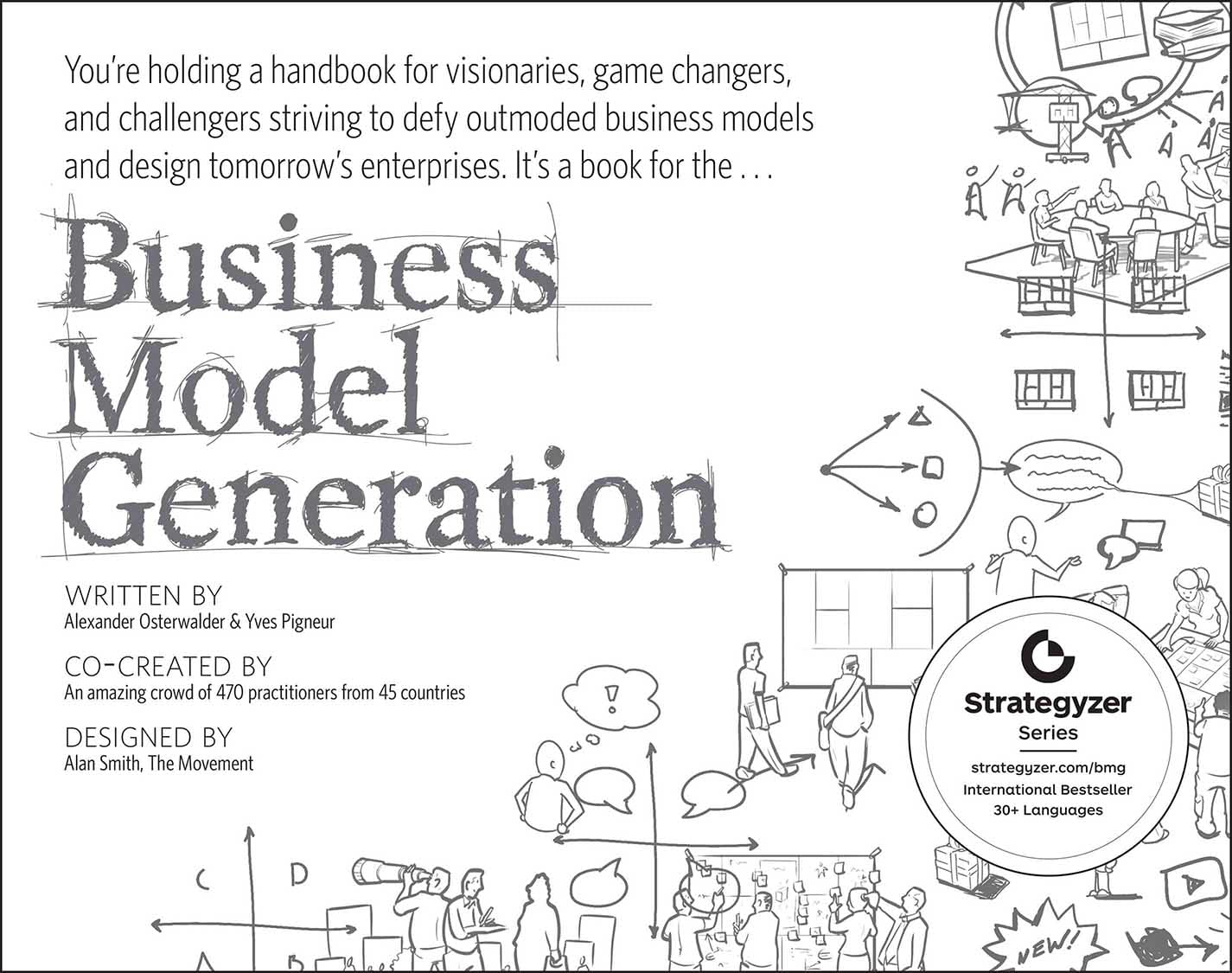
Business Model Generation: A Handbook for Visionaries, Game Changers, and Challengers
Business Model Generation is a handbook for visionaries, game changers, and challengers striving to defy outmoded business models and design tomorrow's enterprises. By Alex Osterwalder & Yves Pigneur.

The Mom Test: How to Talk to Customers & Learn if Your Business is a Good Idea
How to Talk to Customers & Learn if Your Business is a Good Idea by Rob Fitzpatrick.

Traction: How Any Startup Can Achieve Explosive Growth
Gabriel Weinberg's playbook for getting customers. 19 traction channels explained.
Tools & Resources
Software and services to accelerate your Validation stage.
 tools
tools
Emergent.sh
Chat interface design tool for frontend and backend development. Coupon code: ROVNRMMG for 5% off on all payments
 courses
Ikigai: The Japanese Secret to a Long and Happy Life Hardcover
Ikigai: The Japanese Secret to a Long and Happy Life explores the Japanese concept of ikigai—the overlap of what you love, what you're good at, what you can be paid for, and what the world needs—as the key to a happier and longer life.
 tools
tools
Lovable.dev
AI-powered platform that builds full-stack web applications and websites from simple, natural language prompts.
 tools
tools
Qoder
Qoder is a next-generation AI-powered coding platform developed by Alibaba, designed to go beyond simple code completion and act as an agentic coding environment for real-world software development. Here’s what makes it unique:
 courses
The Power of Regret: How Looking Backward Moves Us Forward
The Power of Regret: How Looking Backward Moves Us Forward
 courses
Idea Validation in Entrepreneurship
Learn how to test if your entrepreneurial ideas can be made into a successful business or not with this free course.
Some links are affiliate links. We may earn a small commission at no extra cost to you.
Next Steps
Once your feasibility is validated and you've received a "Proceed" decision from your Go/No-Go analysis, you're ready to design your MVP in Playbook 04. The financial model you've built here becomes the scorecard against which you'll measure your MVP's real-world performance.
Ready to Build Your MVP?
Your business model is validated. The unit economics work. The risks are managed. Now it's time to design the minimum viable product that will test your model in the real world.
Playbook 04 covers: product requirements from validated insights, minimum viable architecture design, build vs. buy vs. fake-it decisions, technical stack selection, and preparing for your first paying customers.
Go to Playbook 04: MVP & Solution DesignSave Your Progress
Create a free account to save your reading progress, bookmark chapters, and unlock Playbooks 04-08 (MVP, Launch, Growth & Funding).
Get Access to Feasibility Tools
Sign up free to use 80+ AI-powered tools for business model validation, financial modeling, and feasibility analysis.
Start Free TodayRelated Guides
Lean Startup Guide
Master the build-measure-learn loop and the foundations of validated learning to build products people actually want.
From Layoff to Launch
A step-by-step guide to turning industry expertise into a thriving professional practice after a layoff.
Fintech Playbook
Master regulatory moats, ledger architecture, and BaaS partnerships to build successful fintech products.