Tools & Resources
AI-powered tools and recommended resources for Customer Discovery.
Your Validation Toolkit
Frameworks and theory are essential, but tools are what make validation operational. This chapter provides the practical toolkit that turns the concepts from previous chapters into repeatable actions.
Throughout this playbook, we've referenced specific LeanPivot AI tools at the moments where they're most useful. This chapter brings them all together in one place, organized by the phase of validation they support, with guidance on which to use when and how they connect to each other. Think of this as the equipment list for your validation expedition -- you don't need every tool for every situation, but having the right tool at the right moment dramatically improves your odds of finding genuine signal.
A note on tool dependency: customer discovery is not a linear process, despite the way this playbook is structured. You'll loop back through phases as you learn. Your interviews will reveal questions your surveys need to answer. Your surveys will surface hypotheses that need smoke testing. Your smoke test results will raise questions that require follow-up interviews. The tools below support this iterative cycle, and each one is designed to feed its outputs into the next tool in the chain.
Recommended Workflow
Use these tools in sequence for best results. Each tool's output becomes the next tool's input:
- Assumption Mapper -- Start here. Identify and prioritize every assumption in your business model using the D.V.F.+S framework. The output tells you what to test first.
- Interview Script Generator -- Create unbiased customer interview questions tailored to your highest-priority assumptions. The Mom Test-compliant scripts prevent you from asking leading questions or falling into compliment traps.
- Insight Survey Builder -- After qualitative interviews reveal patterns, build quantitative surveys to verify those patterns at scale. The tool flags biased questions and recommends sample sizes.
- Market Signal Tester -- Design behavioral experiments (landing page tests, fake doors, concierge MVPs) with clear hypotheses and pre-defined kill criteria.
- Problem-Solution Fit Analyzer -- Synthesize all your findings to assess whether your solution matches the problem you've uncovered. Identifies gaps between what customers need and what you're proposing.
- Pivot Evaluator -- When all evidence is gathered, use this tool to make the pivot/persevere/kill decision based on structured analysis rather than gut feeling.
Choosing the Right Tool for the Right Question
Different validation questions require different tools. Use this reference to quickly identify which tool addresses which type of uncertainty:
| Question You're Asking | Best Tool | Evidence Type Produced |
|---|---|---|
| "What are my riskiest assumptions?" | Prioritized risk map (D.V.F.+S) | |
| "Does this problem really exist?" | Qualitative (interviews) | |
| "How many people have this problem?" | Quantitative (survey data) | |
| "Will people take action for this?" | Behavioral (revealed preference) | |
| "Does my solution match the problem?" | Synthesized analysis | |
| "Should I pivot, persevere, or kill?" | Decision framework | |
| "Which value prop resonates most?" | Comparative (A/B signals) |
Common Pitfalls When Using Validation Tools
Tools are only as good as the practitioner wielding them. These are the most common mistakes we see founders make when using validation tools -- even good ones:
Avoid Leading Questions
Don't ask questions that confirm your biases. Even with a well-designed interview script, it's easy to unconsciously add leading follow-ups. Record your interviews and review them for bias. Use the Interview Script Generator's bias-detection feature to audit your questions before each interview round.
Avoid Compliment Traps
Don't pitch your solution during discovery interviews. The moment you describe what you're building, every subsequent response is contaminated by social pressure. Focus on understanding the customer's problem, not validating your solution. Save solution validation for smoke tests and prototype feedback sessions.
Avoid Premature Surveys
Don't send surveys before doing qualitative interviews. Surveys are excellent at quantifying patterns you've already identified, but terrible at discovering patterns you haven't thought of. Do at least 5-8 interviews before designing your first survey, so you know which questions to ask and which answer options to include.
Avoid Moving Goalposts
Don't change your kill criteria after seeing the results. Define success thresholds before running experiments, share them with an accountability partner, and stick to them. If your smoke test missed the threshold by "just a little," that's still a miss. Redefine your hypothesis and test again rather than rationalizing a failure as a success.
Tool Deep Dives
Below is a deeper look at each core tool, including when to use it, what inputs it needs, and how to interpret its outputs. Each tool is mapped to the specific playbook chapters where its framework is explained in detail.
Assumption Mapper
When to use: At the very start of validation, after completing your Lean Canvas in Playbook 01. Re-run whenever you pivot or significantly change your business model.
What it does: Takes your business model as input and generates a comprehensive list of assumptions classified by D.V.F.+S risk category (Desirability, Viability, Feasibility, Strategic). Each assumption is ranked by impact and uncertainty, producing a clear testing priority sequence.
Key output: A prioritized assumption map with your "Leap of Faith" assumptions highlighted. This directly drives which experiments you run first.
Framework reference: Chapter 3 (Epistemological Foundations) covers the D.V.F.+S framework and Assumption Mapping Matrix in detail.
Interview Script Generator
When to use: Before every round of customer interviews. Update the script as you learn -- each round should build on insights from the previous one.
What it does: Generates a Mom Test-compliant interview script tailored to your customer segment and the specific assumptions you're testing. Includes warm-up questions, problem exploration questions, JTBD-style questions, and commitment-seeking closing questions. Automatically flags any questions that violate Mom Test principles.
Key output: A ready-to-use interview guide with 15-20 questions, organized by interview phase, with probing follow-up suggestions for each section.
Framework reference: Chapter 4 (Qualitative Discovery) covers the Mom Test, JTBD framework, and the discovery interview script in depth.
Insight Survey Builder
When to use: After your qualitative interviews have revealed patterns that need quantitative verification. Not a substitute for interviews -- a complement to them.
What it does: Helps you design bias-free surveys with proper screening questions, randomized answer orders, and appropriate Likert scales. Includes sample size calculators and flags common survey design mistakes (double-barreled questions, leading language, hypothetical framing).
Key output: A polished survey ready for distribution, with statistical guidance on how many responses you need for meaningful results and how to interpret the data.
Framework reference: Chapter 5 (Quantitative Verification) covers survey design principles and statistical reality checks.
Market Signal Tester
When to use: When you need behavioral evidence that goes beyond what interviews and surveys can provide. Use this to design landing page tests, fake door experiments, concierge MVPs, and other revealed-preference experiments.
What it does: Helps you design experiments using the standard template: "We believe [audience] will [action] for [reason]. We'll know we're right if [metric] reaches [threshold] within [timeframe]." Includes CTA Strength Ladder recommendations and threshold benchmarks by industry.
Key output: A complete experiment plan with hypothesis, method, success criteria, kill criteria, and gray zone protocols -- all defined before you start.
Framework reference: Chapter 6 (Behavioral Economics) covers smoke tests, fake door experiments, and the CTA Strength Ladder.
Problem-Solution Fit Analyzer
When to use: After gathering both qualitative and quantitative evidence. This tool synthesizes multiple data sources to assess whether your proposed solution genuinely addresses the problem you've uncovered.
What it does: Takes your interview insights, survey results, and experiment data as inputs. Evaluates the alignment between the problem (as customers describe it) and your solution (as you've designed it). Identifies gaps, misalignments, and areas where your solution exceeds or falls short of customer expectations.
Key output: A fit assessment with specific recommendations for improving alignment. Highlights which aspects of your solution customers would find most valuable and which they'd find unnecessary.
Framework reference: Chapters 4-7 collectively build the evidence base that this tool synthesizes.
Pivot Evaluator
When to use: At decision points -- when you've completed a round of experiments and need to decide whether to persevere, pivot, or kill the current direction.
What it does: Implements the Pivot Compass framework from Chapter 7. Takes all your evidence as input and maps it to the four Pivot Compass quadrants (Product-Market Fit, False Positive, Solution Mismatch, Dead End). If a pivot is recommended, suggests the specific type of pivot most supported by the evidence.
Key output: A structured pivot/persevere/kill recommendation with supporting evidence, confidence level, and suggested next actions for each option.
Framework reference: Chapter 7 (Synthesis & Decision) covers the Pivot Compass, pivot types, kill criteria, and decision biases.
LeanPivot AI Tools
AI-powered tools to help you execute this stage faster.
Lean Interview Guide
Generate customer interview scripts with best practices.
Insight Survey Builder
Design effective customer surveys that get real insights.
Market Signal Tester
Create smoke tests to validate demand before building.
Resonance Scorecard
Test messaging effectiveness with target customers.
Problem-Solution Fit Analyzer
Validate that your solution addresses the real problem.
Pivot Compass
Guide pivot or persevere decisions with evidence.
Recommended External Tools
Third-party tools that complement this stage of your journey.
Recommended Reading
Essential books for the Validation stage.

Running Lean: Iterate from Plan A to a Plan That Works
Ash Maurya's practical guide to Lean Canvas and continuous innovation.
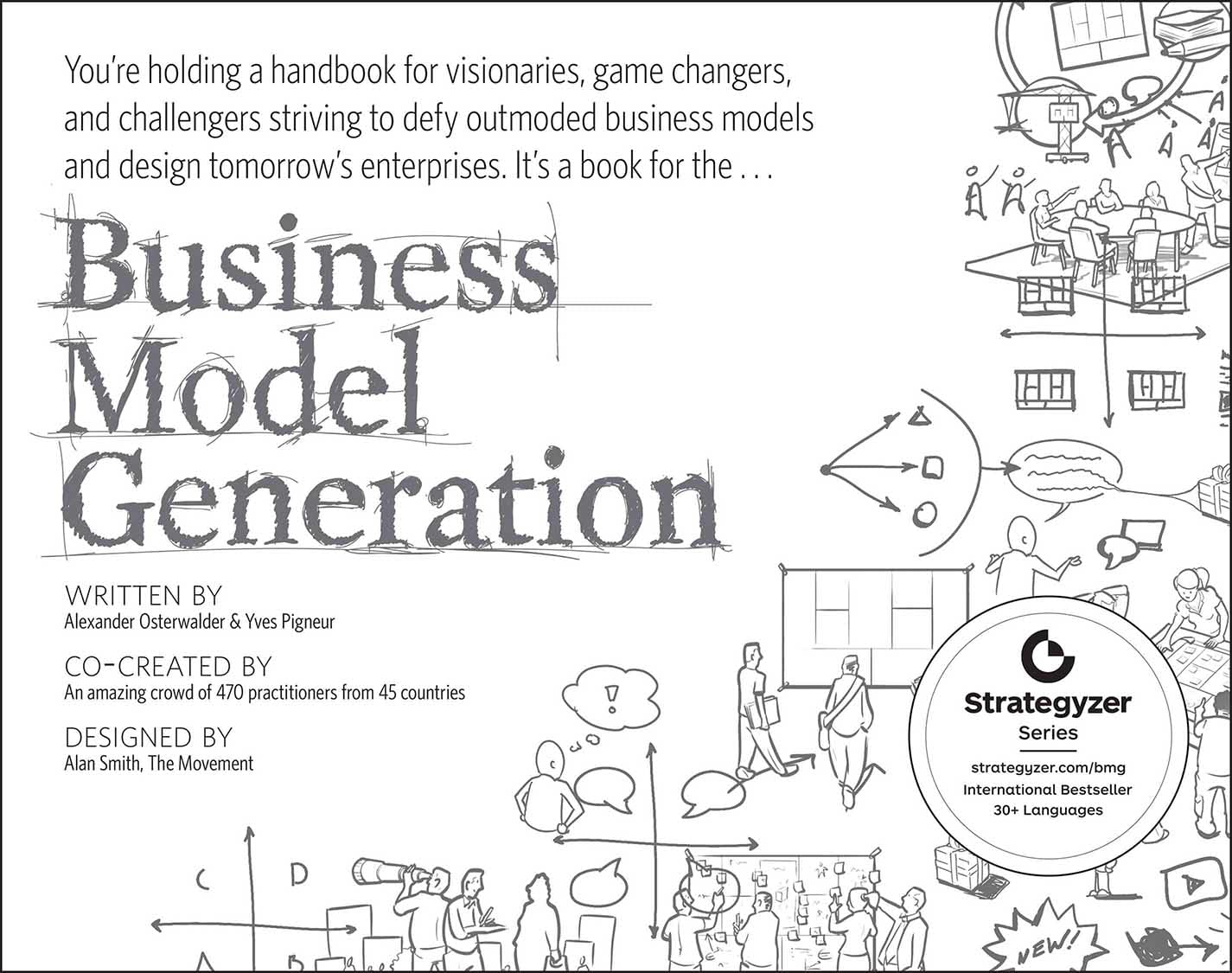
Business Model Generation: A Handbook for Visionaries, Game Changers, and Challengers
Business Model Generation is a handbook for visionaries, game changers, and challengers striving to defy outmoded business models and design tomorrow's enterprises. By Alex Osterwalder & Yves Pigneur.

The Mom Test: How to Talk to Customers & Learn if Your Business is a Good Idea
How to Talk to Customers & Learn if Your Business is a Good Idea by Rob Fitzpatrick.

Traction: How Any Startup Can Achieve Explosive Growth
Gabriel Weinberg's playbook for getting customers. 19 traction channels explained.
Tools & Resources
Software and services to accelerate your Validation stage.
 tools
tools
Emergent.sh
Chat interface design tool for frontend and backend development. Coupon code: ROVNRMMG for 5% off on all payments
 courses
Ikigai: The Japanese Secret to a Long and Happy Life Hardcover
Ikigai: The Japanese Secret to a Long and Happy Life explores the Japanese concept of ikigai—the overlap of what you love, what you're good at, what you can be paid for, and what the world needs—as the key to a happier and longer life.
 tools
tools
Lovable.dev
AI-powered platform that builds full-stack web applications and websites from simple, natural language prompts.
 tools
tools
Qoder
Qoder is a next-generation AI-powered coding platform developed by Alibaba, designed to go beyond simple code completion and act as an agentic coding environment for real-world software development. Here’s what makes it unique:
 courses
The Power of Regret: How Looking Backward Moves Us Forward
The Power of Regret: How Looking Backward Moves Us Forward
 courses
Idea Validation in Entrepreneurship
Learn how to test if your entrepreneurial ideas can be made into a successful business or not with this free course.
Some links are affiliate links. We may earn a small commission at no extra cost to you.
External Resources and Reading List
The tools above operationalize the frameworks covered in this playbook. If you want to go deeper on any topic, these are the foundational resources that informed our approach:
Essential Books
- The Mom Test by Rob Fitzpatrick -- The definitive guide to customer interviews. Short, practical, and immediately applicable. If you read one book on validation, make it this one.
- Testing Business Ideas by David Bland and Alex Osterwalder -- A comprehensive library of 44 experiment types organized by evidence strength. Excellent reference for experiment design.
- Running Lean by Ash Maurya -- Translates Lean Startup principles into a step-by-step process. Strong on the Lean Canvas and iterative validation cycles.
- The Lean Startup by Eric Ries -- The foundational text on validated learning, the Build-Measure-Learn loop, and the pivot. Required reading for understanding the philosophy behind the practice.
- Competing Against Luck by Clayton Christensen -- The definitive work on Jobs to Be Done theory. Essential for understanding what customers are really "hiring" your product to do.
Free Online Resources
- Strategyzer's Testing Library -- Free experiment templates and hypothesis canvases from the creators of the Business Model Canvas.
- LeanPivot Validated Learning Guide -- Our comprehensive guide to the Build-Measure-Learn loop with practical examples.
- Steve Blank's Blog -- Regular posts on customer development methodology from the father of the Lean Startup movement.
- First Round Review -- Case studies and tactical advice from founders who've navigated the validation stage successfully.
- Lenny's Newsletter -- Practical product management advice including sections on validation, product-market fit metrics, and customer research techniques.
Building Your Validation Stack
Beyond the LeanPivot tools, here are complementary tools that support the validation workflow at different stages:
| Category | Purpose | Recommended Tools |
|---|---|---|
| Landing Page Building | Create smoke test pages quickly | Carrd, Webflow, Unbounce, Framer |
| Survey Distribution | Distribute and collect survey responses | Typeform, Google Forms, SurveyMonkey |
| Ad Testing | Drive traffic to smoke test pages | Facebook Ads, Google Ads, Reddit Ads |
| Interview Recording | Record and transcribe customer calls | Otter.ai, Grain, Fireflies.ai |
| Analytics | Track conversion on landing pages | Google Analytics, Mixpanel, Hotjar |
| Customer Recruitment | Find interview participants | LinkedIn, User Interviews, Respondent.io |
Next Steps
Once you've validated your assumptions through customer discovery, you're ready to assess Feasibility in Playbook 03. The transition from "Does anyone want this?" (Playbook 02) to "Can we build this profitably?" (Playbook 03) is one of the most important inflection points in your startup's journey. Everything you've learned and documented in your Lean Vault feeds directly into the feasibility analysis.
Ready for Feasibility Analysis?
Your assumptions are validated. You've confirmed that a real problem exists, that customers care enough to take action, and that there's a viable market worth pursuing. Now it's time to prove the business model works financially -- and to design the minimum viable product that will take you from validated problem to validated solution.
Go to Playbook 03: FeasibilitySave Your Progress
Create a free account to save your reading progress, bookmark chapters, and unlock Playbooks 04-08 (MVP, Launch, Growth & Funding).
Get Access to Validation Tools
Sign up free to use 80+ AI-powered tools for customer discovery, assumption testing, experiment design, and evidence-based decision making.
Start Free TodayRelated Guides
Lean Startup Guide
Master the build-measure-learn loop and the foundations of validated learning to build products people actually want.
From Layoff to Launch
A step-by-step guide to turning industry expertise into a thriving professional practice after a layoff.
Fintech Playbook
Master regulatory moats, ledger architecture, and BaaS partnerships to build successful fintech products.
Works Cited & Recommended Reading
Lean Startup & Innovation Accounting
- 1. Navigating the 2026 AI-Native Enterprise Stack. LeanPivot.ai
- 4. Validated Learning Techniques. LeanPivot.ai
- 5. How to Make "Pivot or Persevere" Decisions. Kromatic
- 6. Lean Methodology - Innovation Accounting Guide. SixSigma.us
- 28. Running Lean, Second Edition. BEL Initiative
Assumption Mapping & Testing
- 7. Invest in Winning Ideas with Assumption Mapping. Miro
- 10. Testing Business Ideas: Book Summary. Strategyzer
- 11. Innovation Tools – The Assumption Mapper. Nico Eggert
- 14. Business Testing: Is your Hypothesis Really Validated? Strategyzer
- 16. An Introduction to Assumptions Mapping. Mural
- 17. Assumption Mapping Techniques. Medium
Customer Interviews & The Mom Test
- 8. Book Summary: The Mom Test by Rob Fitzpatrick. Medium
- 22. The Mom Test for Better Customer Interviews. Looppanel
- 23. The Mom Test by Rob Fitzpatrick [Actionable Summary]. Durmonski.com
- 9. How to Evaluate Customer Validation in Early Stages. Golden Egg Check
Jobs-to-Be-Done Framework
- 24. Jobs to be Done 101: Your Interviewing Style Primer. Dscout
- 25. How To Get Results From Jobs-to-be-Done Interviews. Jobs-to-be-Done
- 26. A Script to Kickstart JTBD Interviews. JTBD.info
Product-Market Fit & Surveys
- 33. Sean Ellis Product Market Fit Survey Template. Zonka Feedback
- 34. How to Use the Product/Market Fit Survey. Lean B2B
- 35. Product Market-Fit Questions: Tips and Examples. Qualaroo
- 36. Product/Market Fit Survey by Sean Ellis. PMF Survey
Pricing Validation Methods
- 38. Willingness to Pay: What It Is and How to Find It. Baremetrics
- 39. Pricing Products - Van Westendorp Model. First Principles
- 40. How To Price Your Product: Van Westendorp Guide. Forbes
- 41. Gabor Granger vs Van Westendorp Models. Drive Research
Smoke Tests & Fake Door Testing
- 43. Smoke Tests in Market Research - Complete Guide. Horizon
- 45. Fake Door Testing - How it Works, Benefits & Risks. Chameleon.io
- 52. High Hurdle Product Experiment. Learning Loop
- 53. Fake Door Testing: Measuring User Interest. UXtweak
Conversion Benchmarks & Metrics
- 46. Landing Page Statistics 2025: 97+ Stats. Marketing LTB
- 47. Understanding Landing Page Conversion Rates 2025. Nudge
- 49. What Is A Good Waitlist Conversion Rate? ScaleMath
- 54. Average Ad Click Through Rates (CTRs). Smart Insights
Decision Making & Kill Criteria
- 57. From Test Results to Business Decisions. M Accelerator
- 58. Kill Criteria for Product Managers. Medium
- 59. When to Kill Your Venture - Session Recap. Bundl
This playbook synthesizes research from Lean Startup methodology, Jobs-to-Be-Done theory, behavioral economics, and validation frameworks. Some book links may be affiliate links.