You have officially entered the most important part of the founder’s journey. By now, you have used AI to build an MVP in record time. You have set up your tracking tools to measure exactly what users are doing. You have the data sitting in front of you. Now, you have to decide what it actually means.
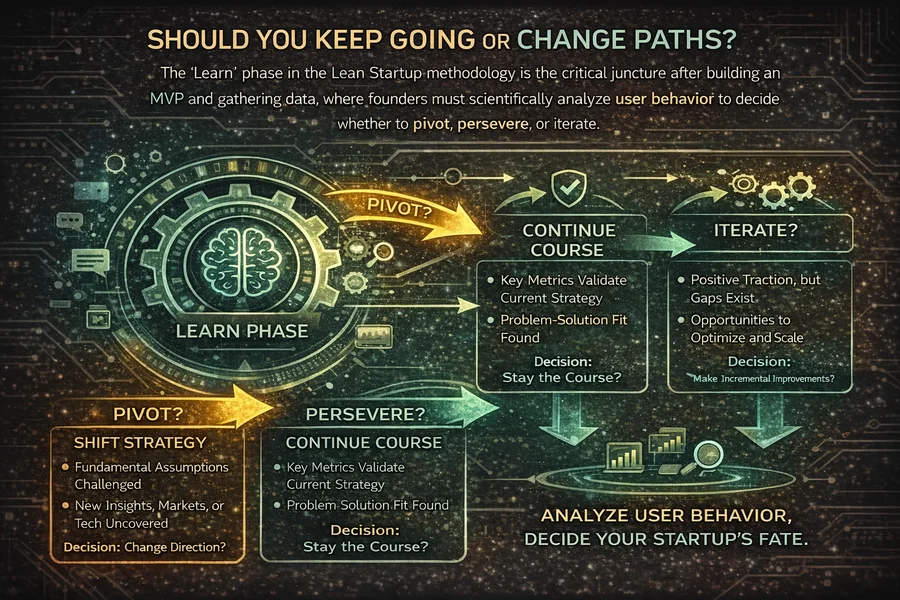
In the Lean Startup world, this is the "Learn" phase. It is the moment where you stop being a builder and start being a scientist. Most startups fail not because they couldn't build the app, but because they built something that nobody wanted to use. The learning phase is your insurance policy against wasting years of your life on a dead-end idea.
In this new era of "vibe coding," where we can build things in days instead of months, the way we learn has changed. Because code is now cheap and fast to create, your most valuable asset isn’t your software—it’s the knowledge you gain about your customers.
The Goal is Validated Learning
Before we talk about making big changes, we need to understand what we are searching for. We call it "Validated Learning." This is a fancy way of saying "proving your ideas are right using real-world experiments."
When you started this journey, you didn't have a business plan; you had a list of guesses. You guessed that people had a specific problem. You guessed they would use your tool to solve it. You guessed they might pay for it. Validated learning is the process of turning those guesses into facts.
If your data shows that users are clicking your "Join" button but leaving as soon as they see the price, you have learned a fact: your price might be too high, or your value isn't clear. That knowledge is more valuable than the code you wrote. Why? Because you can change the code in five minutes with an AI prompt. But without that knowledge, you would just keep building features for a product that was destined to fail.
The Built-Measure-Learn Loop as a Circle
Think of your startup as a giant wheel. Every time you go through the Build, Measure, and Learn phases, you have completed one "loop."
In the old days of business, it took six months to complete one loop. You would spend $50,000 on developers, three months building, and two months marketing, only to find out you were wrong. By then, you were out of money. You only got one "swing at the ball."
In 2026, the game is different. Because you are using a $200 tech stack and AI tools like Lovable, Cursor, and n8n, you can complete a loop in two weeks. This means in the same six months, you can try twelve different ideas. Your goal isn't to be right on the first try; your goal is to go around the circle as fast as possible until you find the idea that "clicks." The faster you learn, the faster you win.
The "Five Whys" Technique
When the data tells you something is wrong, your first instinct might be to panic or get frustrated. Instead, you should use a technique called the "Five Whys." This is a simple but powerful way to find the root cause of any problem.
Imagine your data shows that people are signing up for your app but never coming back a second time.
By the fifth "why," you have found the real problem. It wasn't that your app was bad; it was that your onboarding process was too complicated. Now you can go back to your AI tool and say, "Remove the settings page and let users start their first task immediately." You have learned something specific and actionable.
The Big Decision: Pivot or Persevere?
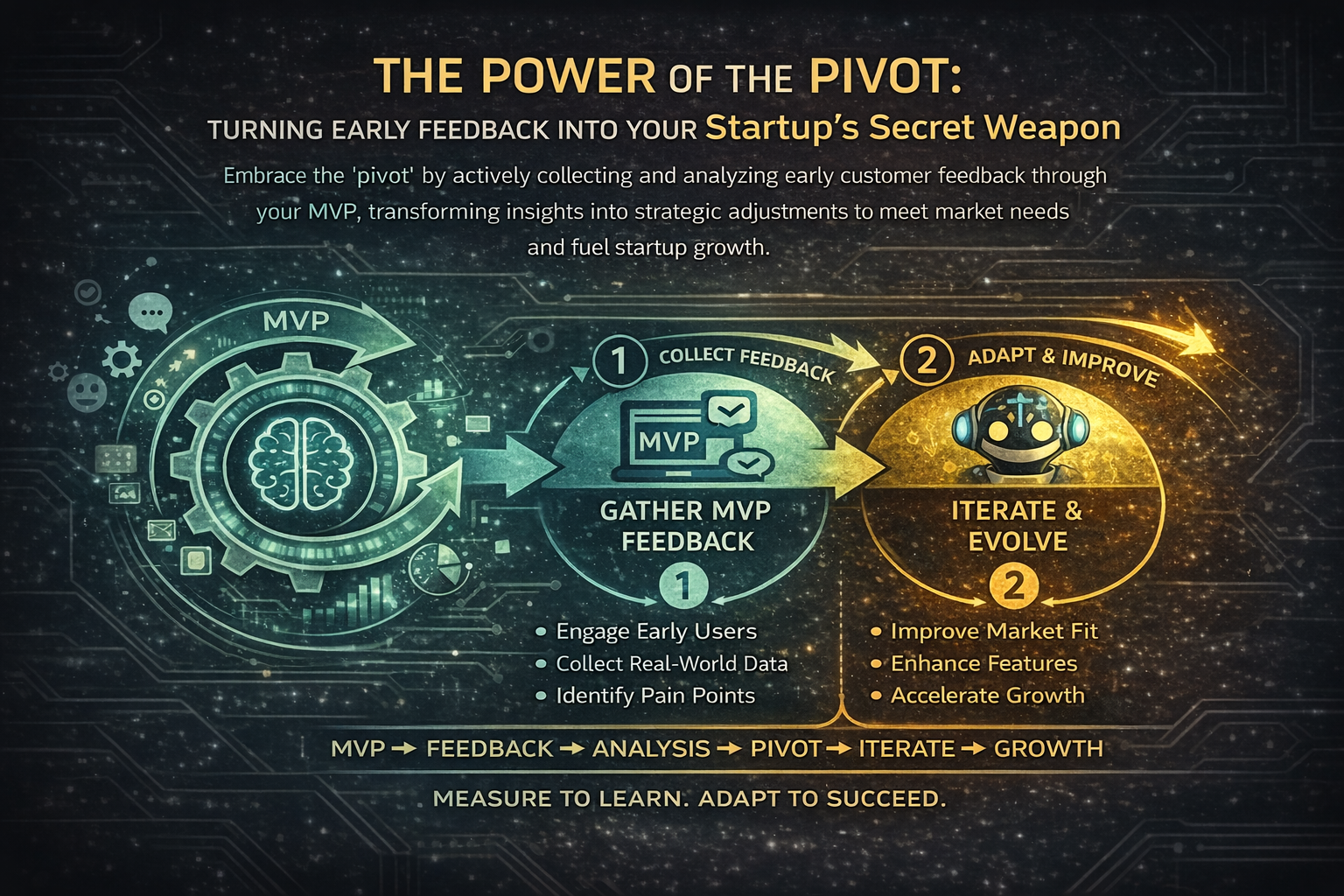
The most famous concept in the Lean Startup world is the "Pivot." After you have learned from your data, you reach a fork in the road. You must choose to either Persevere or Pivot.
Persevering
Persevering means staying the course. You do this when your data shows that you are moving in the right direction. If your retention is growing and users are telling you they love the "Magic Moment," you keep going. You might make small "iterations"—like making the site faster or adding a missing button—but you don't change the core idea. You are doubling down on what works.
Pivoting
A pivot is a "structured course correction." It is not the same as quitting. Think of a basketball player. When they pivot, they keep one foot (their "vision") firmly on the floor while they move the other foot to find a better angle.
There are many ways to pivot. You might realize your product is great, but you’re talking to the wrong people. This is a Customer Segment Pivot. For example, you built a tool for teachers, but you realize that corporate trainers are the ones actually using it.
You might realize that out of your ten features, people only care about one. This is a Zoom-in Pivot. You "zoom in" and make that one feature the entire product. Many of the world’s most successful companies, like Instagram and Slack, started this way. They were large, complex apps that realized people only liked one specific part of what they did.
The Psychology of Being Wrong
This is the hardest part of being a founder. We all want to be right. We all want to be seen as visionaries who knew exactly what the world needed. When the data tells us our idea isn't working, it hurts our ego.
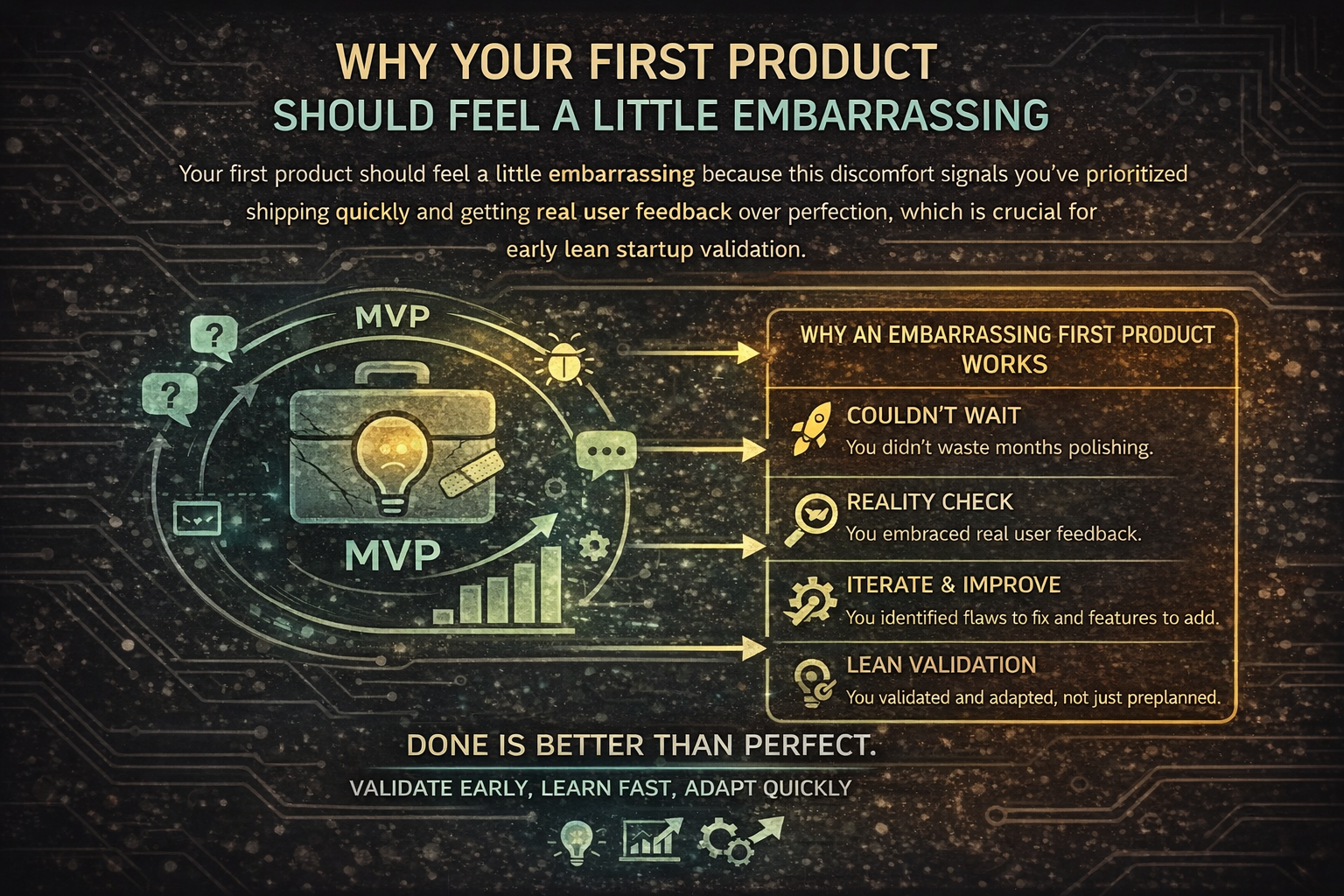
In the "vibe coding" era, this is actually a bigger challenge. Because it is so easy to build things, we can become "addicted" to the build. We keep adding features and tweaking colors because it feels like progress. But "vibe coding" too much without learning can lead to what we call "Vibe Mess"—a pile of code that does a lot of things but doesn't solve any real problems.
To be a successful solopreneur, you must learn to love the problem, not your solution.
To be a successful solopreneur, you must learn to love the problem, not your solution. If you are obsessed with solving the problem of "helping people manage their time," you won't care if your first app fails. You will be excited that you learned why it failed, because that brings you one step closer to the real solution.
Dealing with the "Vibe Mess"
As you learn and pivot, your code will start to get messy. Since you are moving fast and using AI to generate most of your work, you will eventually hit a wall where adding a new feature breaks three old ones.
The "Learn" phase is also the time to decide when to clean up. Once you have validated your idea—meaning you have real users who are happy and paying—you must spend a little time on maintenance. You can ask your AI tools to "refactor" your code, which means cleaning it up without changing what it does. You move from a "clickable proof" to a "production-ready business."
However, don't do this too early! If you spend three weeks cleaning up code for an app that nobody wants, you are wasting your time. Only clean the house once you know people are coming to the party.
The Power of the Pivot Success Story
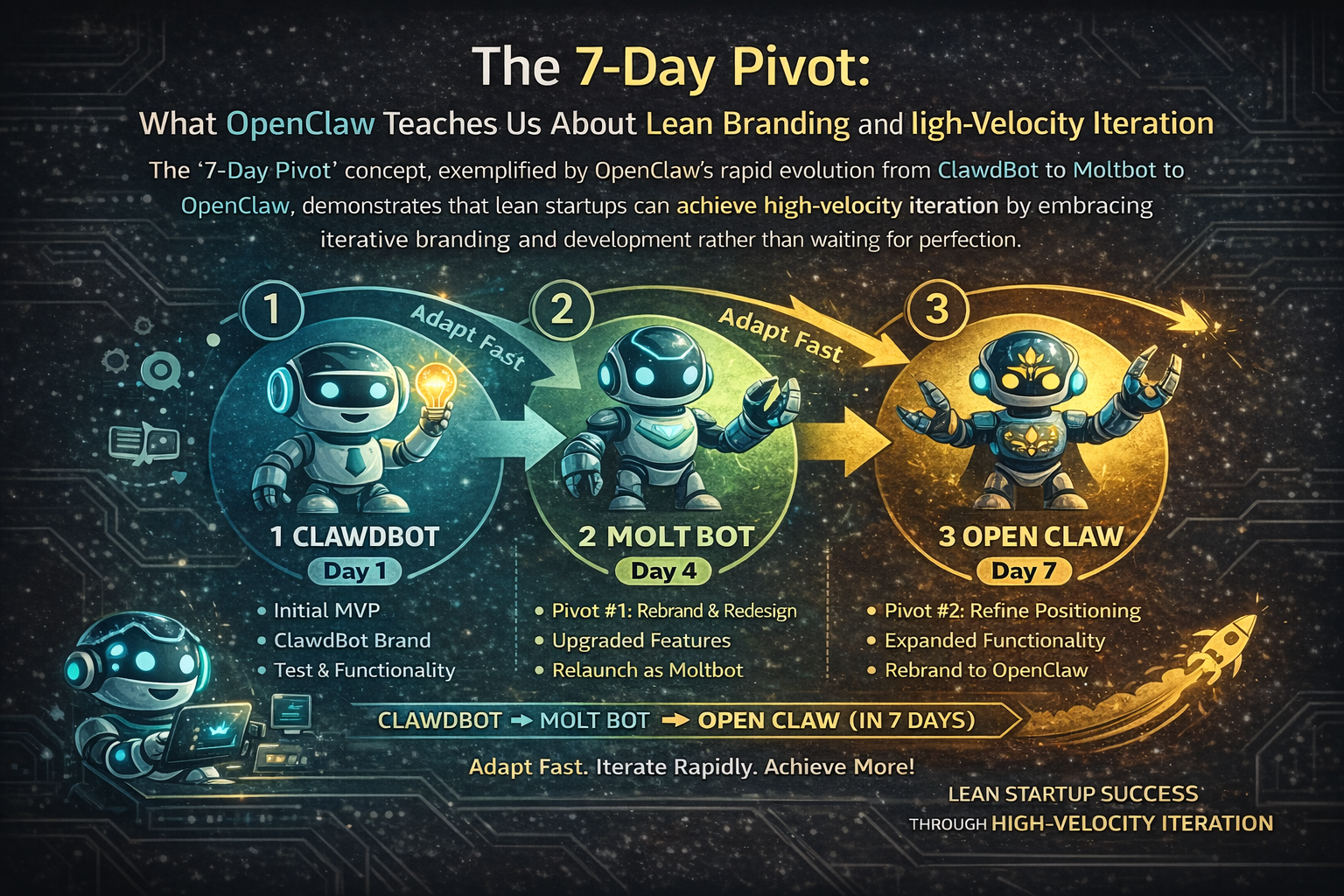
Many founders find comfort in knowing that almost every "overnight success" was actually a series of smart pivots.
There are founders who built mobile app portfolios that were shut down by big platforms. They didn't quit; they learned which apps were the most popular and rebuilt them even better. There are founders who spent months building a tool that failed, only to realize that the internal tool they built to help themselves was actually the product people wanted to buy.
In 2026, the story of the "genius in a garage" is being replaced by the "scientist in a loop." The winner is the person who can admit they were wrong the fastest.
Your Learning Checklist
As you finish this final post in the series, look at your MVP and your data. Ask yourself these questions:
- Did anyone have a "Magic Moment"? If yes, who were they? How can you find more of them?
- Where did people get stuck? Use the "Five Whys" to find out.
- Is it time to pivot? If your retention is zero and nobody is clicking your main feature, don't just "add more features." Change your direction.
- Are you keeping your costs low? If you are still under $200 a month, you have the "runway" to keep learning.
Conclusion: The Loop Never Ends
The "Build-Measure-Learn" cycle is not something you do once; it is how you run your business forever. Even when you are making $10,000 a month, you will still be building new features, measuring how people use them, and learning if they were actually a good idea.
The most successful founders in the world are the ones who are the best at learning. They use AI to stay fast, they use data to stay honest, and they use pivots to stay alive.
You have the tools. You have the stack. You have the framework. Now, take what you have learned and start your next loop. The solopreneur life isn't about being right; it's about being willing to learn until you are. Stop vibing in the dark. Turn on the lights, look at the truth, and keep building.

No comments yet
Be the first to share your thoughts on this article!